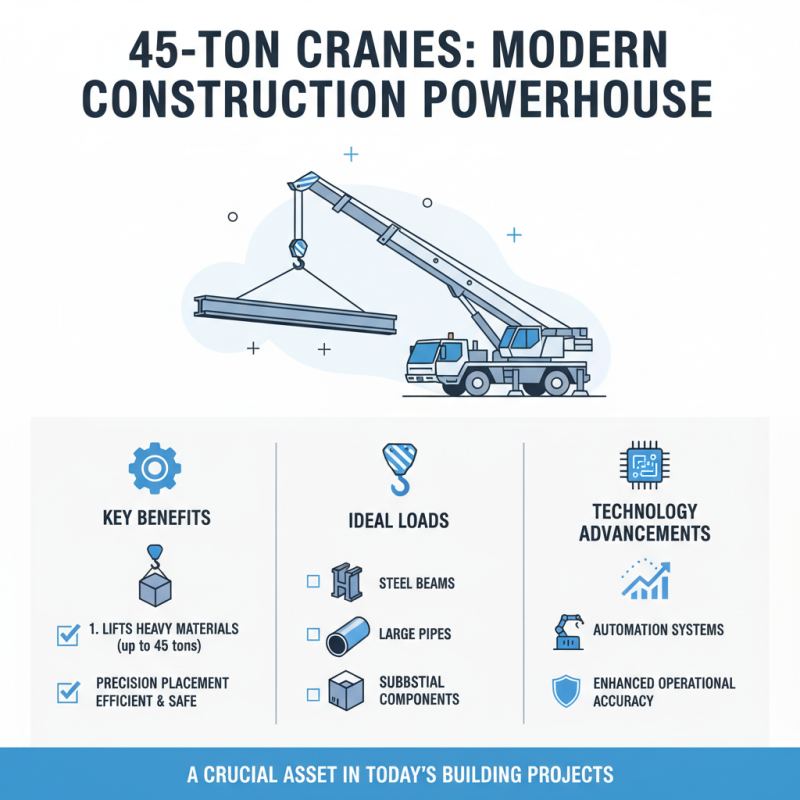
What is a 45 Ton Crane and How is it Used in Construction?
The construction industry relies heavily on specialized equipment, and one vital piece is the 45 ton crane. This powerful machine is designed to lift and transport heavy materials on job sites. Its robust design allows it to handle various tasks, making it indispensable in construction.
Operators utilize a 45 ton crane for erecting structures, moving steel beams, and placing heavy concrete blocks. The versatility of this crane is truly remarkable. It can work in tight spaces as well as open areas, adapting to different project needs. However, using such a massive machine comes with challenges.
Safety concerns are paramount when operating a 45 ton crane. Improper handling can lead to accidents and damage. It requires skilled operators who understand its capabilities and limitations. Not every operator is adequately trained, sometimes leading to mistakes. Therefore, continuous training and assessment are necessary. A 45 ton crane is essential, but it demands respect and caution on site.

What is a 45 Ton Crane? Overview of Specifications and Features
A 45 ton crane is a powerful piece of equipment used in construction. It can lift heavy materials with precision. Typically, it features a large, telescoping boom that allows for extended reach. This flexibility makes it ideal for various tasks, such as erecting steel beams or lifting concrete panels.
One must consider the specifications carefully. The height and reach can vary depending on the model. The load capacity is crucial—it directly affects safety. Operators often face challenges. The crane's movements must be coordinated with other machinery on-site. This requires clear communication and planning. Sometimes, obstacles can obscure the crane's view, leading to mistakes.
Knowing the limitations of a 45 ton crane is critical. Proper training is essential for operators. Improper use can lead to accidents. Regular maintenance checks ensure the crane functions correctly. Even small issues should not be overlooked. A small malfunction can result in significant delays in construction projects. Proper planning, operation, and maintenance are crucial for safety and efficiency.
Key Components of a 45 Ton Crane: Understanding Functionality and Design
A 45-ton crane is designed to lift heavy materials in construction sites. Its key components play an essential role in its operation. The crane's boom is crucial, extending to reach various heights. Operators use the boom to maneuver loads with precision.
The winch system is another vital element. It consists of a motor and drums that control the cable. This system allows for smooth lifting and lowering of heavy items. Effective planning is required to avoid accidents. The counterweights help stabilize the crane, countering the loads being lifted. Balancing the crane remains a challenge that demands constant attention.
The operator cabin offers visibility and control. However, operators must remain alert to avoid mistakes. Communication on-site is equally important. Misunderstandings can lead to dangerous situations. Regular maintenance is essential to ensure all components function correctly. A single faulty part can disrupt operations and increase risks. Understanding these components highlights the complexity and responsibilities in crane operations.
Construction Equipment Weight Comparison
This bar chart illustrates the weight of various cranes used in construction. The 45 Ton Crane stands out as a medium to large capacity lift, which is crucial for heavy lifting tasks in construction projects.
Applications of 45 Ton Cranes in Construction Projects: Case Studies
In construction, a 45-ton crane plays a vital role. Its capacity makes it suitable for various tasks. For instance, it is often used to lift heavy steel beams. This is crucial when constructing multi-story buildings. In a recent project, a team utilized a 45-ton crane to install sections of a concrete skeleton. The precision required in placement was impressive. However, challenges arose due to tight site conditions.
Another case involved erecting a wind turbine. The team faced strong winds that complicated operations. The crane had to be repositioned multiple times for safety. They discovered that wind conditions affected its lifting capability. Despite a detailed plan, some unexpected delays occurred. These situations highlight that while 45-ton cranes provide necessary support, they are not infallible. Construction teams must remain adaptable and continuously assess their strategies.
Such examples illuminate the adaptability of a 45-ton crane. It proves essential in many construction scenarios. Yet, operators must consider environmental factors seriously. Equipment efficiency can vary based on circumstances. Reflection on these experiences can lead to better preparations in future projects.
Operational Guidelines: Safety Standards and Best Practices for Use
When operating a 45-ton crane on a construction site, safety is paramount. Understanding load capacities is crucial. The crane must only lift what it is designed for. Overloading can lead to catastrophic failure. Every operator must undergo training. Familiarity with the crane’s functions enhances safety.
Regular inspections are necessary. Operators should check rigging and slings before each use. Dirty or worn equipment can pose significant risks. Clear communication is essential among crew members. Using hand signals or radios minimizes misunderstandings during operations. Weather conditions also impact safety. High winds can affect stability and maneuverability.
Best practices include maintaining a clear work zone. This reduces the risk of accidents. Workers should stay out of the swing radius. Having an emergency procedure in place is vital. Despite all precautions, mistakes can occur. Reflecting on past incidents helps improve safety. Continuous learning is key in the high-stakes environment of construction.
What is a 45 Ton Crane and How is it Used in Construction? - Operational Guidelines: Safety Standards and Best Practices for Use
| Dimension |
Specification |
Usage |
Safety Standards |
| Maximum Load Capacity |
45 Tons |
Lifting heavy materials on construction sites |
OSHA regulations compliance |
| Operating Radius |
Up to 40 Feet |
Suitable for reaching over long distances |
Regular inspection is mandatory |
| Height of Boom |
Various options (up to 100 Feet) |
Used in high-rise construction projects |
Operator certification required |
| Weight of Crane |
Approx. 40 Tons |
Stability in heavy lifting operations |
Load testing before use |
| Power Source |
Diesel or Electric |
Flexible operation in various environments |
Adhere to environmental regulations |
Market Trends and Innovations in 45 Ton Crane Technology and Equipment
The 45 ton crane has become a vital tool in modern construction. These cranes lift heavy materials with remarkable precision. They are ideal for moving steel beams, large pipes, and other substantial loads. Innovations in technology have increasingly improved their efficiency and safety. For instance, many new models feature advanced automation systems, enhancing operation accuracy.
Market trends indicate a growing demand for digital integration in crane operations. Remote monitoring systems allow operators to track performance in real-time. This not only boosts productivity but also helps prevent accidents. Sustainability is another trend that is shaping the future. Virtually every new model aims to optimize fuel consumption.
Tips: Always check the load chart before lifting. This ensures safe operation and prevents accidents. Consider upgrading to a crane with smart technology. It can enhance efficiency and provide valuable data for performance analysis. Remember, attention to detail can make a significant impact on safety and project success.