
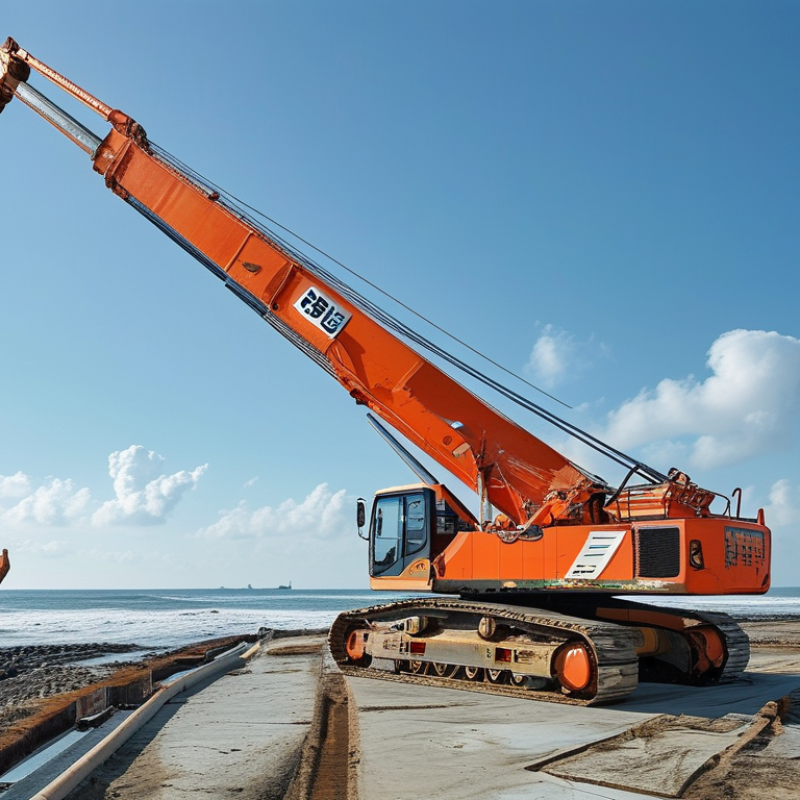
55 Ton Crane 7 Buying Tips for Global Buyers?

Buying a 55 ton crane is not simply a capacity decision. It is a field decision involving ground conditions, transport routes, lifting frequency, weather, maintenance, and operator skill. A crane that performs well in a coastal yard may struggle on a remote construction site. The number “55 tons” is only one part of the machine’s real working story.

Industry lifting specialist Mark Bridger has said, “Safe lifting depends on the whole system, not the crane alone.” That principle should guide every global buyer. Check the load chart, boom length, working radius, counterweight options, outrigger spread, and safety systems. Ask for documented factory testing and clear serial-number records. Confirm whether the supplier can provide manuals, spare parts, training, and responsive technical support in your region.

Look beyond the brochure.

A serious evaluation should include total ownership cost. Freight, import handling, fuel use, insurance, inspections, and planned maintenance can change the purchase value quickly. Ask how the 55 ton crane behaves under uneven ground, narrow access, strong wind, and repeated lifting cycles. Request real job references, not only polished photographs. Speak with operators who have used the same model.

No buying guide is perfect. A checklist may miss local soil behavior or an overlooked transport restriction. That weakness deserves attention. Buyers should involve a qualified lifting engineer and verify every claim against the manufacturer’s current documents. Careful comparison takes time, but rushed purchasing often creates expensive downtime. For international projects, reliability is measured after delivery, not during the sales conversation.

55 Ton Crane 7 Buying Tips for Global Buyers?

Clarify Whether “55 Ton” Means 55 Metric or US Short Tons

When a quotation says “55 ton crane,” pause before comparing prices. “Ton” is not universal. A metric tonne equals 1,000 kilograms, while a US short ton equals 2,000 pounds, or 907.185 kilograms. Therefore, 55 metric tonnes equals 55,000 kilograms, while 55 short tons equals about 49,895 kilograms. The gap is approximately 5.1 tonnes. That difference can alter the required runway, wheels, brakes, and building support. The label looks clear, but it is not.

Ask the supplier to write the unit beside the rated load: 55 t metric or 55 US tons. Avoid “55T” alone. U.S. OSHA 29 CFR 1910.179 requires rated-load markings on overhead cranes. ISO 4301-1:2016 evaluates crane duty through load spectrum and operating cycles, not tonnage alone. A crane lifting lightly all day is not equivalent to one handling near capacity every hour. Rated capacity also depends on span, hook height, trolley position, and load radius.

Independent verification should include the load chart, motor data, hook-block weight, and test documentation. The load chart matters most. A 55-metric-ton rating may fall sharply at long outreach or with unusual attachments. Check kilograms and pounds separately; careless conversions create costly errors. One overlooked detail is power frequency, especially for imported equipment. It can affect motor speed and thermal performance. Buyers sometimes focus on the headline number, then discover that “55 ton” excludes lifting accessories. Clarify that exclusion in writing.

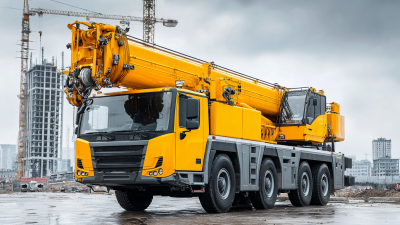
Compare Load Charts at Every Radius, Boom Length, and 55-t Capacity

A 55-ton crane rarely lifts 55 tons in ordinary working conditions. That figure usually applies near the crane’s centerline, with a short boom and full counterweight. Tip one: treat the rated capacity as a starting point, not a promise. Ask for the complete load chart before comparing prices.

Tip two: compare capacities at every working radius. A lift at 5 meters may look strong, while the same load at 20 meters becomes unsafe or impossible. Tip three: check each boom length separately. Longer booms reduce capacity, even when the radius appears unchanged. Never estimate between chart values without qualified engineering guidance. Nominal capacity misleads.

Tip four: confirm the exact configuration behind every chart. Outrigger position, counterweight, hook block, jib, and lifting accessories all affect the allowable load. Tip five: review ground pressure requirements. Soft soil can change a safe chart into an impractical plan. Steel plates may be necessary, but they do not solve every foundation problem.

Tip six: examine wind limits and duty restrictions beside the capacity table. A chart that works indoors may not suit an exposed construction site. Tip seven: request inspection records, manuals, calibration evidence, and operator requirements for your region. Documentation should identify chart revisions clearly. I have seen buyers compare impressive peak figures, then discover their usual lifts fall outside the best configuration. Recheck the working radius with a real site sketch, not a catalog illustration.

55 Ton Crane: 7 Buying Tips for Global Buyers — Compare Load Charts at Every Radius, Boom Length, and 55-t Capacity

A practical, brand-neutral comparison framework for selecting a 55-metric-ton-class mobile crane

Important: A “55-ton crane” rating is a maximum nominal capacity under a specific configuration, radius, boom length, counterweight, support condition, and operating environment. It is not a constant capacity at every radius. Always use the exact manufacturer-issued load chart for the selected configuration and job.
Seven Buying Tips for Global Buyers
Tip Buying Dimension Realistic Data Point or Unit What to Compare Required Evidence Before Purchase
1 Verify the rated capacity correctly 55,000 kg = 55 metric tonnes
≈ 121,254 lb
≈ 60.63 US short tons
Confirm whether the advertised rating uses metric tonnes, US short tons, or imperial tons. Check the radius and configuration associated with the 55-t rating. Original load chart, capacity plate, configuration drawing, and written confirmation of the rated-capacity definition.
2 Compare capacity at the actual working radius Typical review points: 3, 5, 10, 15, 20, 25, and 30 m radius Compare chart-rated capacity at the planned lift radius, not only the maximum headline capacity. Capacity normally decreases as radius increases. Load-chart rows for the exact outrigger position, counterweight, boom length, and lifting mode.
3 Check boom length and working height Review boom lengths from 10 to 50 m where available Longer boom configurations can reduce rated capacity and may require more tail swing, counterweight, or working space. Compare both hook height and working radius. Boom configuration chart, maximum/minimum boom angles, hook-height diagram, and boom-extension procedure.
4 Evaluate ground support and outrigger setup Outrigger position: retracted, intermediate, or fully extended Confirm whether the load chart changes with outrigger span. Check ground-bearing pressure, mat requirements, leveling tolerance, and available setup area. Outrigger reaction data, ground-pressure limits, foundation requirements, and setup drawings.
5 Match transport and site access requirements Measure transport width, height, length, and axle loads in local units Compare road restrictions, bridge limits, turning radius, assembly requirements, and whether counterweights or attachments need separate transport. Transport dimensions, operating weight, axle-load schedule, dismantling plan, and local road-compliance documents.
6 Confirm safety, control, and inspection functions Rated-capacity limiter, angle indicator, radius indicator, anti-two-block device Verify that safety devices display or limit load, radius, boom angle, and moment according to the selected operating configuration. Functional-test procedure, safety-device list, inspection records, maintenance schedule, and applicable regional compliance documentation.
7 Compare lifecycle cost, not only purchase price Fuel, tires or tracks, maintenance intervals, spare parts, training, and downtime Compare total operating cost over the planned ownership period, including mobilization, service support, operator training, and major scheduled maintenance. Warranty terms, parts lead times, service coverage, operator manuals, maintenance intervals, and estimated annual operating cost.
Load-Chart Comparison Matrix

Use this matrix to record the certified capacity from each candidate's exact load chart. The radius and boom-length points below are practical screening coordinates; they are not substitute capacity ratings.

Load-Chart Review Point 3 m Radius 5 m Radius 10 m Radius 15 m Radius 20 m Radius 25 m Radius 30 m Radius
10 m boom OEM chart value OEM chart value OEM chart value OEM chart value OEM chart value OEM chart value OEM chart value
15 m boom OEM chart value OEM chart value OEM chart value OEM chart value OEM chart value OEM chart value OEM chart value
20 m boom OEM chart value OEM chart value OEM chart value OEM chart value OEM chart value OEM chart value OEM chart value
25 m boom OEM chart value OEM chart value OEM chart value OEM chart value OEM chart value OEM chart value OEM chart value
30 m boom OEM chart value OEM chart value OEM chart value OEM chart value OEM chart value OEM chart value OEM chart value
35 m boom OEM chart value OEM chart value OEM chart value OEM chart value OEM chart value OEM chart value OEM chart value
40 m boom OEM chart value OEM chart value OEM chart value OEM chart value OEM chart value OEM chart value OEM chart value
45 m boom OEM chart value OEM chart value OEM chart value OEM chart value OEM chart value OEM chart value OEM chart value
50 m boom OEM chart value OEM chart value OEM chart value OEM chart value OEM chart value OEM chart value OEM chart value
Standardized Data Fields to Record for Every Candidate
Data Field Recommended Recording Format Why It Matters to Global Buyers
Rated capacity kg or metric tonnes; state the reference radius Prevents confusion between metric tonnes, US short tons, and imperial tons.
Rated load at working radius kg at each selected radius and configuration Shows whether the crane can perform the intended lift rather than only meet a headline rating.
Boom length m, including telescopic sections or lattice extensions Allows direct comparison of reach, hook height, and capacity reduction.
Gross operating weight kg, with counterweight and standard equipment stated Determines transport planning, road legality, and ground-loading requirements.
Outrigger span m; record each available outrigger position Different outrigger positions can have different certified load-chart capacities.
Ground-bearing requirement kPa or kN/m², based on supplied reaction data Supports safe foundation and mat design for different soil conditions.
Transport dimensions length × width × height in m; axle loads in kg Helps buyers assess permits, route restrictions, bridges, ports, and job-site access.
Operating environment temperature, wind limit, altitude, and slope limits as specified by the OEM Rated capacity and safe operation can be affected by environmental conditions and site geometry.

Match Crane Duty Class to ISO 4301/1 or FEM 1.001 Service Cycles

For a 55-ton crane, rated capacity is only the starting point. Match the crane duty class to real operating patterns under ISO 4301/1 or FEM 1.001. A crane lifting 40 tons twice daily may need a different class from one lifting 10 tons every five minutes. Record working days, lifts per hour, average load, starts, stops, and trolley travel distance. These details shape the load spectrum and total service cycles.

Do not select a class from capacity alone. Under ISO 4301/1, utilization and load spectrum lead to classifications such as A3, A5, or A7. FEM 1.001 uses utilization groups and load classes, such as 2m or 4m. The systems are related, but not perfectly interchangeable. Ask the supplier to show the calculation basis. Include the expected design life, not only the first-year workload. A duty log from an existing plant is useful evidence. So is maintenance history.

I have seen buyers overestimate occasional overloads and underestimate repetitive light lifts. That mistake can affect fatigue life, brakes, wheels, and wire ropes. Leave room for growth. But avoid paying for an extreme class without operational proof. A clear duty-cycle table makes global comparisons easier. Have a qualified engineer verify the final classification, especially when temperature, dust, outdoor exposure, or high switching frequency is involved. Small assumptions matter.

Verify EN 13000, ASME B30.5, and Local Certification Compliance

When buying a 55 ton crane, certification should be checked before price or delivery time. EN 13000 is important for mobile crane design and safety requirements. It covers areas such as stability, load charts, and control systems. Request the full declaration of conformity, not only a scanned certificate.

ASME B30.5 provides widely recognized guidance for mobile and locomotive crane operation. Check whether the crane’s design, inspection records, and operating procedures match its required edition. Ask for load test results, wire rope records, hydraulic inspection reports, and maintenance history. Check the plate. The rated capacity must match the approved load chart. A 55 ton rating may apply only at a specific radius and configuration.

Local certification can be more complicated. Import permits, road approvals, operator licensing, and third-party inspections may be required separately. Confirm requirements with the authority at the operating site before shipment. Certificates should show the correct serial number, manufacturing year, and configuration. Mismatched paperwork is a warning sign. Keep copies in the buyer’s language when possible. A practical mistake is trusting an international standard without checking local rules. Standards may also have newer editions. Ask an independent qualified inspector to compare the documents with the actual crane. This extra check may delay delivery, but missing one safety detail can cost far more.

Calculate Total Ownership Cost Over 10 Years, Including Parts and Training

55 Ton Crane: 7 Buying Tips for Global Buyers

A 55-ton crane should be evaluated through its ten-year total ownership cost, not its purchase price. Build a spreadsheet with seven cost areas: purchase, freight, installation, energy, maintenance, parts, and training. Add insurance, inspections, storage, and local certification fees. Freight can change sharply when routes, port charges, or exchange rates shift. Do not hide these variables. Show them.

Request maintenance intervals, service records, parts prices, and expected component life. Price high-wear items, including wire ropes, brake components, filters, tires, and control equipment. Keep a stock plan for critical parts, especially when the nearest service center is several days away. A cheap component can create expensive downtime. Calculate lost lifting hours, replacement labor, and emergency transport.

Training also belongs in the ten-year budget. Include operator instruction, maintenance training, refresher courses, travel, and paid practice time. Competent training can reduce handling errors and unsafe operating habits. Confirm that course content matches local workplace requirements. Ask for written inspection procedures and realistic response times. Numbers matter.

Use a contingency reserve of at least 10 percent for uncertain costs, though this is not universal. I have seen ownership models underestimate batteries, corrosion protection, and technician travel. That mistake looks small during purchasing. It becomes painful after three years. Review the model annually, compare actual invoices with forecasts, and adjust the remaining cost estimate. A spreadsheet is useful, but field evidence should correct it.

55-Ton Crane: 10-Year Total Ownership Cost

A planning model for global buyers, shown in USD thousands. The estimate includes acquisition, commissioning, training, energy, maintenance, inspections, insurance, wear parts, and estimated resale value.

Estimated net 10-year ownership cost: $865,000

Before purchasing, compare the full lifecycle cost rather than the initial price. Confirm local service coverage, parts availability, operator and technician training, fuel or energy consumption, inspection requirements, warranty terms, financing costs, and expected resale value. This benchmark excludes taxes, import duties, financing interest, and project-specific transport costs.