Best Perforated Mesh Machine for Efficient Production?
The demand for perforated mesh production has surged in various industries. Reports indicate the market for perforated materials is expected to grow by 5% annually. This showcases the importance of efficiency in manufacturing. A reliable Perforated Mesh Machine can significantly enhance production rates. These machines help create custom patterns, ensuring quality and design flexibility.
Modern perforated mesh machines incorporate advanced technologies. Automation features improve workflow and reduce manual labor. Data suggests that facilities utilizing automated systems see a 30% increase in output. However, not all machines offer the same reliability. Some users report challenges in maintenance and performance over time. Evaluating different brands and models is vital for efficiency.
As the market evolves, innovation continues to play a critical role. Selecting the right perforated mesh machine involves assessing features and customer feedback. Industry leaders emphasize the need for comprehensive research. Investing time in understanding machine specifications can lead to better production outcomes. Balancing quality, cost, and speed is essential for long-term success.
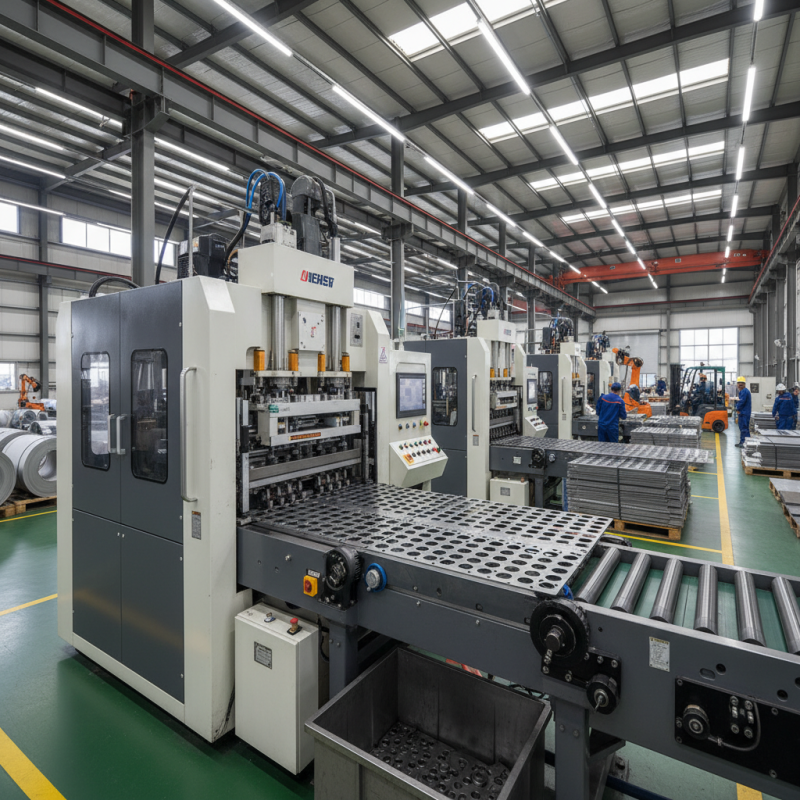
Best Perforated Mesh Machine Overview and Industry Applications
In the realm of manufacturing, perforated mesh machines play a vital role. These machines have a wide range of applications across industries like construction, automotive, and filtration. Their ability to create precise holes in various materials caters to diverse needs. Many manufacturers highlight the effectiveness of different meshes for projects. Knowing how to choose the right machine is essential for optimal output.
One key application is in construction. Perforated mesh is often used in facades and ceilings. It provides aesthetic value and functional benefits, such as ventilation and light diffusion. The intricacies of designing perforated patterns require high levels of expertise. This can lead to variability in product quality, emphasizing the need for skilled operators to run the machines effectively.
In the automotive industry, perforated mesh helps with components like sound insulation and safety features. The complexity of these parts can pose challenges in production. Small errors in perforation can result in significant performance issues. Continuous improvement and training for operators can enhance productivity and quality control. Here, the precision of the perforated mesh machine becomes crucial. A focus on operator skill and machine reliability can greatly impact overall production efficiency.
Key Features to Look for in Perforated Mesh Machines
When selecting a perforated mesh machine, key features play a significant role in ensuring efficient production. The speed of operation is crucial. Research indicates that machines with higher production rates can significantly boost operational efficiency, enhancing output by up to 30%. This metric is vital for businesses striving to meet growing customer demands.
Precision is another essential feature. Machines must deliver consistent hole sizes and spacing. A report from the Metal Fabricating Industry reveals that maintaining accuracy reduces waste by approximately 20%. This reduction not only lowers material costs but also streamlines the manufacturing process, making it more sustainable.
Consider the versatility of the machine as well. Models that can handle various materials increase usability, catering to diverse applications. However, not all machines thrive in this area. Some lack sufficient adaptability, limiting their effectiveness. In a constantly evolving market, flexibility is a benefit that should not be underestimated. Overall, while the quest for the best perforated mesh machine is ongoing, paying attention to these key features will lead to better production outcomes.
Comparative Analysis of Top Perforated Mesh Machines in 2023
When it comes to finding the best perforated mesh machine, 2023 has introduced various models that cater to diverse industrial needs. These machines are designed to enhance production efficiency through precise perforation techniques. Key features often include adjustable hole sizes, speed settings, and robust construction to withstand rigorous use. Each machine brings unique advantages, making it essential to analyze them based on specific requirements.
One notable aspect is the versatility of materials they can handle. Some machines perform well with metals, while others focus on plastics or textiles. It's important to consider the regular maintenance these machines require. A lack of proper care can lead to unexpected downtimes, adversely affecting overall productivity. User experience indicates that while some machines are user-friendly, others may pose a steep learning curve. Careful training can mitigate these challenges.
While comparing the top models, it’s crucial to focus on long-term reliability and performance consistency. Customer feedback often highlights both strengths and weaknesses. Some machines impress with their speed but may sacrifice precision. Others offer excellent accuracy but operate slowly. Balancing these factors will lead to a more informed decision. Each feature merits reflection, ensuring the chosen solution aligns well with production goals.
Efficiency Metrics: Production Rates and Quality Control Standards
When evaluating perforated mesh machines, efficiency metrics include production rates and quality control standards. The production rate is a critical factor for manufacturers. Reports indicate that top-performing machines can reach production speeds of up to 120 meters per minute. This impressive speed allows for increased output but does not guarantee quality.
Quality control is vital in the production process. Machine operators should monitor perforation accuracy to ensure product integrity. A recent study found that 15% of produced mesh failed quality checks due to inconsistent hole sizes. Such defects can lead to costly waste and rework, highlighting the need for effective inspection methods.
Additionally, maintenance impacts production efficiency. Scheduled checks can minimize downtime, but not all facilities prioritize this. Data suggests that a well-maintained machine can operate at 95% of its rated capacity, while neglected machines often drop to 70%. This discrepancy shows the importance of routine upkeep. Balancing speed and quality control is essential for optimal output in perforated mesh production.
Best Perforated Mesh Machine for Efficient Production
| Machine Model | Production Rate (units/hour) | Mesh Size Range (mm) | Material Type | Quality Control Standard |
| Model A | 200 | 0.5 - 10 | Stainless Steel | ISO 9001 |
| Model B | 150 | 1 - 8 | Aluminum Alloy | ASTM D638 |
| Model C | 250 | 0.3 - 7 | Carbon Steel | EN 1010 |
| Model D | 180 | 0.4 - 9 | Copper | JIS G3141 |
| Model E | 300 | 0.6 - 12 | Nickel Alloy | ISO 45001 |
Cost-Benefit Analysis of Investing in Advanced Perforated Mesh Machines
Investing in advanced perforated mesh machines can significantly enhance production efficiency. However, it's essential to conduct a thorough cost-benefit analysis before making this investment. These machines can streamline the production process, reducing manual labor and minimizing errors. This ultimately leads to increased output and quality.
Cost considerations include the initial purchase price and ongoing maintenance. While advanced machines might be more expensive upfront, they often yield better returns. The savings on labor costs and material waste can offset the initial investment over time. However, companies should also consider potential downtime and the learning curve associated with new technology.
Moreover, market demand plays a crucial role in making this decision. If production capacity exceeds demand, the investment might become a financial burden. Organizations must evaluate their unique situation and long-term goals. Achieving the right balance ensures that the advantages outweigh the disadvantages, leading to sustainable growth and efficiency.