How to Choose the Best Small Truck Crane for Your Needs
Choosing the right small truck crane is a crucial decision for businesses and contractors that require efficient lifting solutions without compromising on mobility. According to the American National Standards Institute (ANSI), the demand for small truck cranes has surged over the past few years, reflecting a growing need for versatile equipment that can navigate urban environments and tight job sites. The global small truck crane market is projected to expand at a compound annual growth rate (CAGR) of 5.4% from 2021 to 2026, indicating a strong trend towards more compact and efficient lifting machinery.
When selecting a small truck crane, various factors must be considered, including lifting capacity, boom length, and the type of tasks it will be used for. Industry reports highlight that cranes with a lifting capacity between 8 to 18 tons are ideal for most small to medium-sized construction projects. Furthermore, the rise in construction and maintenance activities in both residential and commercial sectors emphasizes the need for equipment that is not only powerful but also adaptable to diverse working conditions. By understanding the technical specifications and aligning them with project requirements, operators can ensure the right small truck crane is chosen, maximizing efficiency and safety on the job site.
Understanding the Different Types of Small Truck Cranes
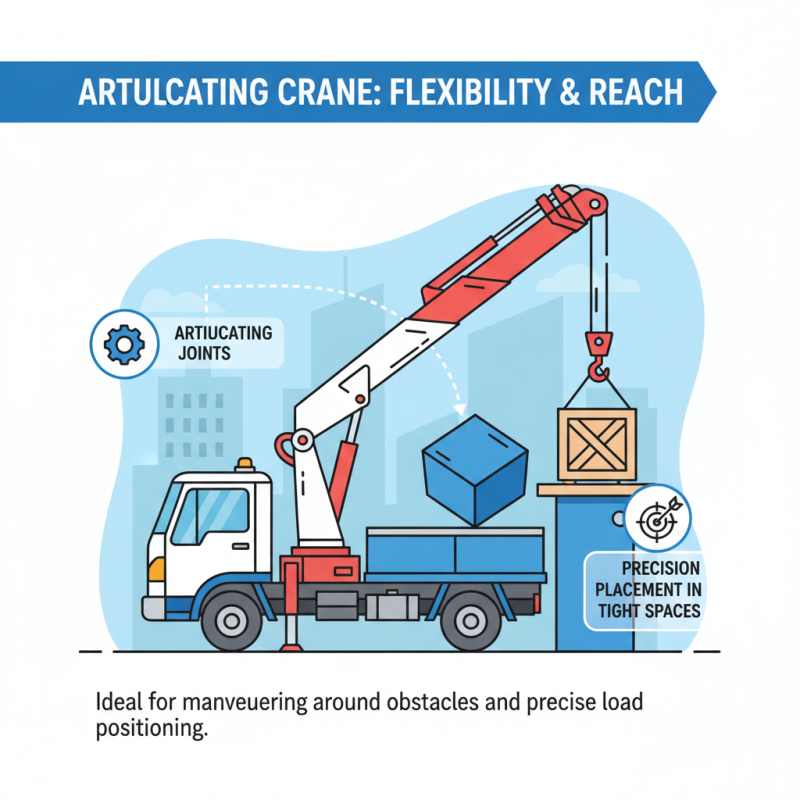
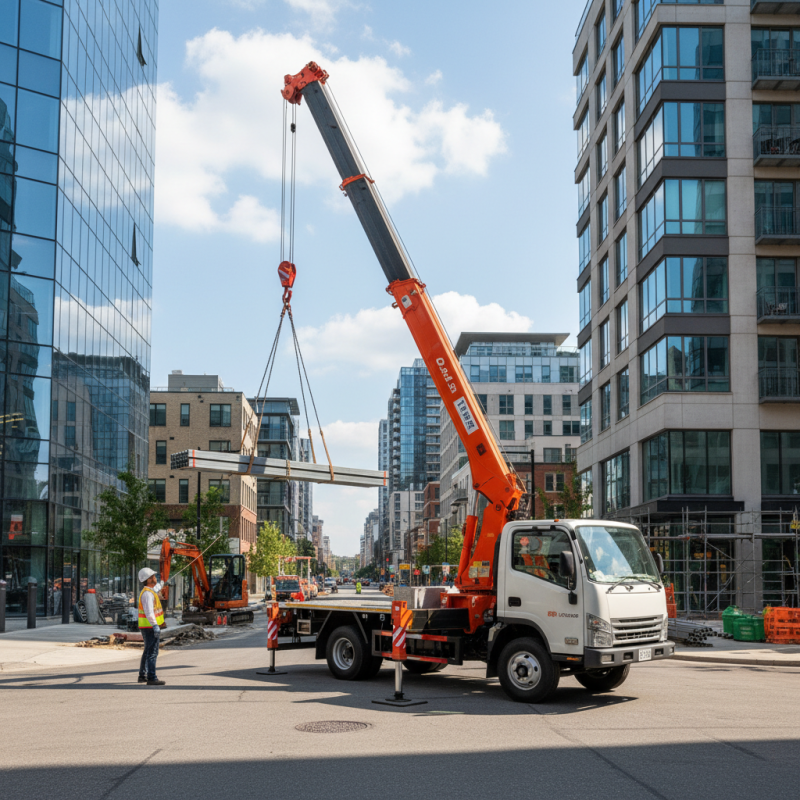
When selecting a small truck crane, it is crucial to understand the different types available to ensure it meets your specific needs. The most common categories include articulating cranes, knuckle boom cranes, and fixed cranes. Articulating cranes offer flexibility and reach, making them ideal for jobs that require maneuvering around obstacles. Their joints allow for a wide range of motion, allowing operators to position loads precisely, which is particularly advantageous in tight spaces.
Knuckle boom cranes, on the other hand, are characterized by their folding arm design, which enables them to extend and retract easily. This compactness makes them excellent for urban environments where space is limited, while still providing substantial lifting power. Fixed cranes, the simplest of the types, offer robustness and straightforward operation, serving well in applications that require lifting heavier loads without the need for extensive mobility.
Recognizing the specific advantages and limitations of each crane type is essential for making an informed decision. Consider the tasks you will be undertaking, the weight of the loads, and the working conditions. Each type presents unique benefits and could significantly impact the efficiency and safety of your operations.
Evaluating Load Capacity Requirements for Your Applications
When selecting a small truck crane, one of the most critical factors to consider is the load capacity required for your specific applications. Understanding the maximum weight that the crane will need to lift is essential, as this directly impacts not only the choice of equipment but also the safety and efficiency of operations.
To determine this, first, assess the materials and equipment you plan to handle, including their weight and dimensions. Accurate estimating will prevent underloading or overloading the crane, both of which can lead to operational hazards or potential equipment damage.
Additionally, consider the working environment in which the crane will operate. Factors such as reach, height, and the type of terrain can influence what load capacity is appropriate. If your operations require lifting at various angles or over obstacles, you may need a crane with higher load capacities that can maintain stability while maneuvering.
Always consult operational charts provided by manufacturers to understand how different configurations can affect lifting capabilities. By thoroughly evaluating your load capacity requirements, you can select a small truck crane that meets your needs efficiently and safely.
Key Features to Consider When Choosing a Small Truck Crane
When selecting the best small truck crane for your needs, several key features should be taken into account to ensure optimal performance and safety. First, pay attention to the lifting capacity of the crane. This refers to the maximum weight it can safely lift, which is crucial depending on your specific tasks. Assessing the types of loads you will be handling can help you choose a crane with an appropriate maximum load rating to prevent potential accidents or equipment failure.
Another important feature to consider is the crane's reach and height capabilities. Different projects may require various lifting heights and distances, so evaluating the boom length and extension options is essential. Additionally, look at the truck's overall stability and maneuverability, as a stable base will ensure safer operations, especially on uneven terrain. Examining features such as outriggers and weight distribution will contribute significantly to the crane's performance and safety during lifts. Lastly, user-friendly controls and the crane's ease of operation can enhance efficiency and reduce the likelihood of operator errors during use.
Assessing Mobility and Stability in Small Truck Cranes
When selecting a small truck crane, assessing its mobility and stability is crucial. Mobility allows the crane to maneuver easily in different environments, especially in tight spaces or urban areas. Look for features such as a compact design, lightweight materials, and good turning radius. A crane that is easy to transport can save time and increase efficiency on job sites.
Stability is equally important, as it ensures safe operation under various load conditions. Consider the crane's base design and the materials used in construction. Cranes with a wider base generally offer better stability, reducing the risk of tipping during operation. Additionally, check for features like outriggers or stabilizers that can be deployed to enhance balance when lifting heavy loads.
Tips:
- Always check the load capacity and ensure it meets your specific lifting requirements.
- Prioritize cranes with good visibility for the operator, improving control during maneuvers.
- Consider the ease of setup and takedown, as this can significantly impact your workflow on the job.
How to Choose the Best Small Truck Crane for Your Needs - Assessing Mobility and Stability in Small Truck Cranes
| Model |
Max Load Capacity (ton) |
Mobility (4WD/Y/N) |
Stability Rating (1-10) |
Weight (kg) |
| Model A |
5 |
Y |
8 |
1500 |
| Model B |
7 |
N |
9 |
1800 |
| Model C |
3 |
Y |
7 |
1200 |
| Model D |
10 |
Y |
10 |
2100 |
Budgeting for Purchase and Maintenance of a Small Truck Crane
When considering the purchase of a small truck crane, one of the most crucial factors is budgeting for both the initial acquisition and ongoing maintenance. According to the Equipment Leasing and Finance Association, businesses should allocate approximately 15-20% of the purchase price of heavy equipment for annual maintenance costs. For instance, if a small truck crane costs around $40,000, it’s advisable to set aside between $6,000 and $8,000 each year to ensure that it remains in optimal working condition.
In addition to maintenance, insurance and storage also impact the total budget. Research from the American Rental Association indicates that insurance costs for construction equipment typically range from 1-3% of the equipment’s value per year. This means an additional $400 to $1,200 for our $40,000 crane. Furthermore, depending on your business operations, you may also need a secure location for storage when the crane is not in use, which can lead to additional rental costs.
Tips: Always conduct a thorough risk assessment of your operational environment to ascertain proper insurance coverage and storage solutions. Additionally, consider investing in a preventive maintenance plan, which can significantly reduce long-term repair costs. Maintain a detailed log of maintenance activities to help maximize the lifespan of your small truck crane. This proactive approach not only minimizes unexpected expenses but also helps maintain productivity by ensuring your equipment is always ready for use.
Budgeting for Purchase and Maintenance of a Small Truck Crane