What is Fiberboard Medium Density Board and its Benefits?
Fiberboard Medium Density Board, often referred to as MDF, has gained significant traction in the woodworking industry. According to Dr. Emily Smith, an expert in composite materials, "Fiberboard Medium Density Board represents a revolution in sustainable building materials." MDF combines natural wood fibers with resin, providing a durable and versatile solution for furniture and cabinetry.
This innovative material is not only affordable but also flexible in its applications. Whether used for intricate designs or flat surfaces, Fiberboard Medium Density Board offers reliable performance. However, there are imperfections worth noting. For instance, its susceptibility to moisture can limit its use in certain environments.
Despite these challenges, the benefits of Fiberboard Medium Density Board cannot be overlooked. It is lightweight, making installations easier. Additionally, its smooth surface allows for a superior finish. As the demand for eco-friendly materials rises, Fiberboard Medium Density Board remains at the forefront, proving that efficiency and sustainability can coexist in modern design.
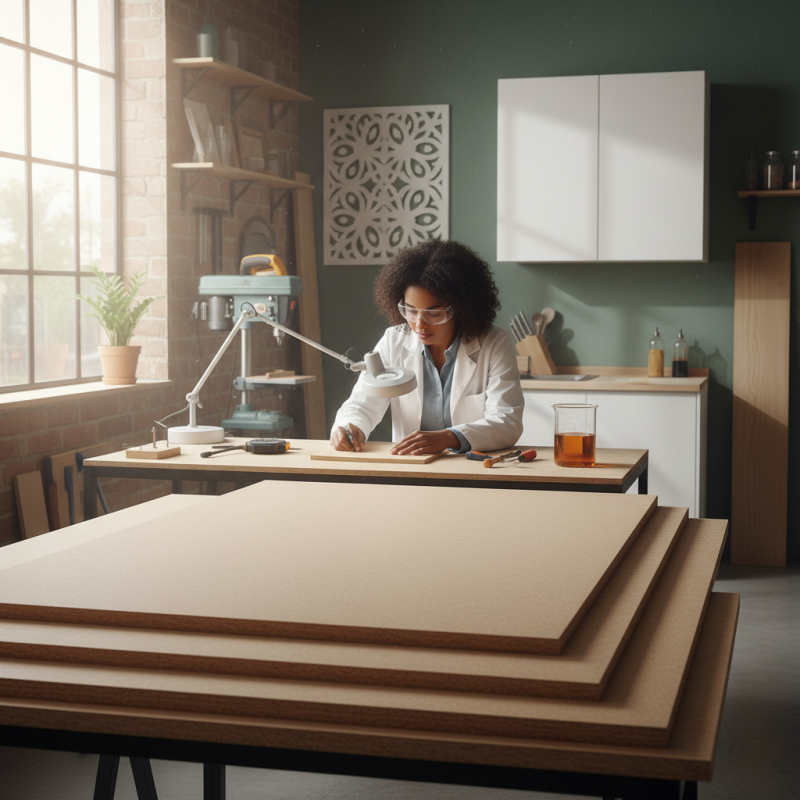
Definition and Composition of Fiberboard Medium Density Board
Fiberboard Medium Density Board (MDF) is a versatile material made from wood fibers. The process involves breaking down wood into small fibers and binding them with adhesives under heat and pressure. This creates a strong, dense board with a smooth surface. MDF is commonly used in furniture, cabinetry, and flooring due to its durability and flexibility.
The composition of MDF typically includes wood fibers, wax, and adhesives. These components work together to enhance the board’s structural integrity. The density of MDF is usually between 600 to 800 kg/m³, making it heavier compared to particle board. The even texture allows for precise cutting and shaping, making it an ideal choice for intricate designs. However, MDF can be prone to moisture issues if not properly sealed, leading to potential swelling or degradation.
While MDF offers several advantages, it lacks some natural appeal found in solid wood. It's also important to consider the environmental aspects of production. Some adhesives used may release VOCs, which can impact indoor air quality. Balancing the benefits and drawbacks is crucial for informed decisions about its use.
Manufacturing Process of Fiberboard Medium Density Board
Fiberboard Medium Density Board (MDF) is produced through a meticulous process that emphasizes both efficiency and quality. The manufacturing process begins with wood fibers, which are sourced from various timber species. These fibers are often derived from sawmill residues and recycled wood, making MDF more sustainable. Reports indicate that the production of MDF can reduce wood waste by up to 80%, presenting a significant environmental benefit.
Once wood fibers are collected, they undergo a drying process. This reduces moisture content to optimal levels, ensuring better bonding during later stages. The fibers are then mixed with adhesives and subject to high temperature and pressure in a hydraulic press. This step is critical as it transforms the loose fibers into a solid board. Quality control measures are essential, and adjustments in the mixture can lead to variances in durability and finish, challenging manufacturers to ensure consistency.
After pressing, the boards are trimmed and sanded to create a smooth surface. However, this post-processing can sometimes result in uneven edges, necessitating further refinements. The end product is versatile, used in furniture, cabinetry, and interior design. According to industry data, MDF accounts for approximately 30% of the global wood panel market, underscoring its prominent role. While the benefits are substantial, manufacturers must rival challenges, such as ensuring sustainability and quality across production runs.
Key Benefits of Using Fiberboard Medium Density Board
Fiberboard Medium Density Board, often referred to as MDF, is a popular material in the construction and furniture industry. Its smooth finish makes it suitable for painting and veneering. This versatility allows it to blend seamlessly into various design aesthetics. Whether in cabinetry or decorative paneling, MDF stands out for its adaptability.
One major benefit of using MDF is its uniform density. Unlike solid wood, it does not warp or crack easily. This means projects using MDF can maintain their intended shape over time. It also offers excellent sound absorption, making it a preferred choice for soundproofing in homes and offices. However, keep in mind that it can be susceptible to water damage if not properly sealed.
MDF is also easier to work with than natural wood. Its consistency allows for precise cuts and shapes, which is beneficial in intricate designs. For some, the drawback is its environmental impact due to wood fibers sourced from various trees. While it seems like a sustainable option, not all MDF is made from recycled materials. Thus, users should reflect on the environmental implications of their choices. Investing in quality MDF can enhance both appearance and functionality in a project.
What is Fiberboard Medium Density Board and its Benefits? - Key Benefits of Using Fiberboard Medium Density Board
| Feature | Description | Benefits |
| Density | Typically between 600 to 800 kg/m³ | Provides a balance between strength and weight |
| Surface Finish | Smooth and even surface which is easy to paint or laminate | Ideal for a variety of applications including furniture and cabinetry |
| Moisture Resistance | Can be treated to improve moisture resistance | Suitable for kitchens and bathrooms |
| Ease of Work | Can be easily cut, drilled, and shaped | Flexibility in design and production |
| Cost-Effectiveness | Generally more affordable than solid wood alternatives | Reduces total expenses for projects |
| Sustainability | Made from recycled wood fibers | Environmentally friendly option |
Common Applications of Fiberboard Medium Density Board
Fiberboard Medium Density Board (MDF) offers excellent versatility. This engineered wood product finds applications across various industries. Its smooth surface is ideal for furniture and cabinetry. MDF is often used in decorative items like moldings and frames. The capacity to easily cut and shape makes it popular among craftsmen.
For construction purposes, MDF is frequently utilized in wall panels and cabinetry. Its dense structure provides strength while ensuring a lightweight experience. This flexibility is valuable for both residential and commercial projects. This product also supports eco-friendly practices due to its composition of recycled wood fibers.
Tips: When working with MDF, always wear a mask. The dust can be harmful when cut. Consider sealing the edges to prevent moisture absorption. Not all tools work well with MDF. A fine-toothed saw is recommended to achieve smooth edges.
Though MDF is a fantastic option, it is not without limitations. It can be susceptible to water damage if not properly treated. Over time, exposure to humidity can weaken its structure. Therefore, it’s essential to consider the environment where it will be used.
Comparison with Other Types of Wood Panels
Medium Density Fiberboard (MDF) offers a distinct balance of quality and versatility in woodworking. Compared to other wood panels, such as plywood and particle board, MDF stands out. It is made from wood fibers, which are compressed and bonded under heat and pressure. This process creates a dense, smooth surface ideal for painting and veneering.
Plywood, while strong and durable, consists of several layers of wood glued together. This structure can lead to warping with moisture exposure. Particle board, on the other hand, is made from wood chips and glue, making it less expensive but also less sturdy. MDF’s uniformity allows for intricate designs, but it can be prone to edge chipping and requires careful handling during installation.
When choosing between these options, consider the intended use. MDF is great for cabinets and furniture where a smooth finish is desired. However, its moisture sensitivity may lead to issues in high-humidity areas. Each material has its pros and cons, and understanding these can help one make an informed decision for their woodworking projects.
Comparison of Fiberboard and Other Wood Panel Types
This chart illustrates the density of different types of wood panels, highlighting the Medium Density Fiberboard (MDF) and how it compares to plywood, particleboard, and oriented strand board (OSB). MDF typically has a higher density, providing benefits such as improved strength and smoother surfaces for finishes.