Top 10 Heavy Crane Types You Should Know About?
In the heavy crane industry, understanding the various types of cranes is crucial. Notably, expert John Smith, a renowned safety consultant in the field, stated, "Selecting the right heavy crane can significantly impact project efficiency." His insight underscores the importance of knowing which cranes suit specific tasks.
Heavy cranes come in diverse forms, each designed for unique applications. From mobile cranes to tower cranes, the functionality varies greatly. These machines often lift massive loads, shaping industries like construction and shipping. But not every project is the same, and choosing the wrong crane can lead to inefficiencies and unexpected risks.
As projects become more demanding, the need for precise equipment selection grows. Understanding crane types can mitigate hazards and enhance productivity. Yet, many overlook this vital aspect. A thoughtful approach is essential, as it can prevent costly mistakes. Reflecting on this can lead to better-informed decisions in the heavy crane industry.
Types of Heavy Cranes: An Overview of Their Functions
Heavy cranes play a vital role in construction and engineering projects. They are designed for specific functions and tasks. Understanding the types of heavy cranes can enhance project efficiency.
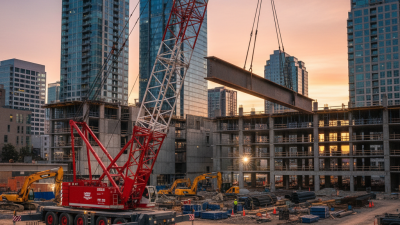
One of the most common types is the crawler crane. It operates on tracks, offering stability in rough terrain. These cranes can lift heavy loads, making them ideal for large construction sites. Another type is the tower crane, which reaches great heights. They are perfect for urban construction, allowing tall buildings to rise quickly.
Rough terrain cranes are versatile. They can handle rugged environments and complex jobs. Their all-terrain capability makes them a favorite on job sites. However, selecting the right crane isn’t always straightforward. Each type has its advantages and limitations. Cost, load capacity, and site conditions are crucial considerations. Just because a crane can lift, doesn’t mean it should. Proper planning is essential for successful execution.
Top 10 Heavy Crane Types You Should Know About
| Crane Type |
Maximum Load Capacity |
Typical Applications |
Mobility |
| Crawler Crane |
Up to 3,000 tons |
Construction sites, large infrastructure projects |
Tracked mobility |
| Mobile Crane |
Up to 1,200 tons |
Building sites, road projects |
Wheeled mobility |
| Tower Crane |
Up to 20 tons |
High-rise buildings, large commercial projects |
Fixed, with rotating base |
| Rough Terrain Crane |
Up to 50 tons |
Off-road construction, outdoor projects |
Wheeled mobility |
| Lattice Boom Crane |
Up to 1,000 tons |
Heavy lifting, offshore projects |
Fixed or mobile |
| Overhead Crane |
Up to 600 tons |
Warehouses, factories |
Fixed, rail-mounted |
| Floating Crane |
Up to 1,500 tons |
Maritime construction, dredging |
Waterborne |
| Articulated Crane |
Up to 300 tons |
Urban construction, tight spaces |
Wheeled mobility |
| Telehandler |
Up to 10 tons |
Agriculture, construction material handling |
Wheeled mobility |
The Characteristics That Define Different Heavy Crane Types
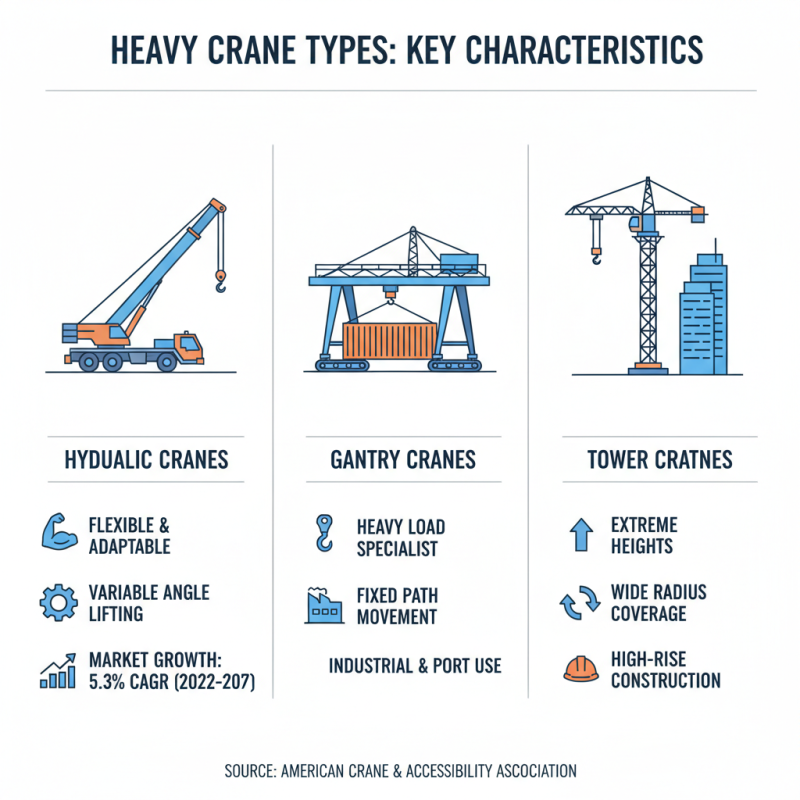
Heavy cranes play a critical role in construction and industrial projects. Understanding their characteristics is essential for selecting the right type. For instance, hydraulic cranes are known for their flexibility and ability to lift heavy loads at various angles. According to the American Crane and Accessibility Association, the hydraulic crane market is expected to grow at a CAGR of 5.3% from 2022 to 2027. This growth reflects the increasing demand for versatility and efficiency in lifting operations.
Crawler cranes, on the other hand, are designed for stability and mobility on rough terrains. They feature a robust undercarriage that allows them to operate on uneven ground, making them ideal for construction sites. Reports indicate that the crawler crane segment contributes significantly to the overall heavy lift equipment market, emphasizing their importance in large-scale projects. However, while they offer great stability, they can also be less efficient in quick repositioning compared to mobile cranes.
Additionally, tower cranes are essential in urban construction. These structures provide height and lift capacity that is crucial for skyscrapers. The design allows them to be integrated into buildings, which can pose challenges in terms of space and accessibility. Studies suggest that the market for tower cranes is rapidly evolving, with advancements in technology leading to better automation and safety features. It’s clear that each crane type has unique advantages and considerations that should not be overlooked in project planning.
Applications of Heavy Cranes in Various Industries
Heavy cranes play a vital role across various industries. In construction, cranes lift heavy materials, enabling the seamless assembly of high-rise buildings. According to a report by the International Crane Association, the global crane market is expected to reach $50 billion by 2025, reflecting high demand.
In manufacturing, heavy cranes transport large machinery and components. They optimize production lines and reduce labor costs. Industries like automotive and aerospace rely heavily on these machines for assembly tasks. The demand for cranes in these sectors has been growing at a rate of 5% annually, indicating their importance in operational efficiency.
Tip: Regular crane maintenance is essential. Neglect can lead to costly downtime or accidents. Ensure daily inspections are routine.
Additionally, the energy sector employs heavy cranes for wind turbine installations. The increasing focus on renewable energy sources highlights the crucial role of cranes in this transition. However, crane operators must be trained thoroughly. Inadequate training can result in inefficiencies and safety risks. The job demands
attention to detail and adherence to
safety regulations.
Tip: Invest in training programs. Well-trained operators prevent accidents and increase productivity. Safety must always come first.
Safety Considerations When Operating Heavy Cranes
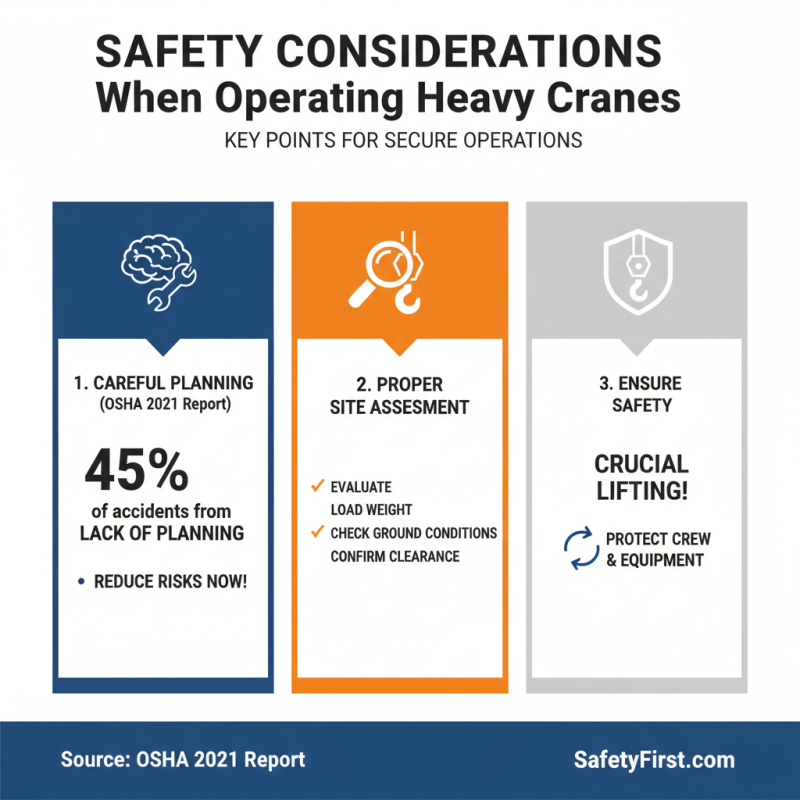
Operating heavy cranes comes with significant safety considerations. According to a 2021 report by the Occupational Safety and Health Administration (OSHA), approximately 45% of crane-related accidents stem from a lack of careful planning. Proper site assessment is crucial before any lifting operation. Evaluating load weight, ground conditions, and clearance ensures safety.
Training is vital for crane operators. A study by the National Commission for the Certification of Crane Operators (NCCCO) revealed that certified operators have a 30% lower accident rate. Regular safety drills and pre-lift meetings can enhance communication among team members. This practice fosters a culture of safety and vigilance.
Equipment maintenance also plays a critical role. A well-maintained crane significantly reduces the risk of failure. The American Society of Mechanical Engineers (ASME) recommends daily inspections before use. This reduces the chance of accidents caused by mechanical issues. Operators must have a keen eye for detail, ensuring all components are in good working condition. Not addressing these elements can lead to catastrophic incidents, highlighting the need for ongoing education and reflection on best practices.
Future Trends in Heavy Crane Technology and Design
The heavy crane industry is evolving rapidly. Emerging technologies are changing how cranes operate and are designed. Automation is a significant trend, reducing the need for manual labor. This leads to safer construction sites. However, the reliance on automation raises questions. What happens when technology fails? There is a need for strong backup systems.
Sustainability is another focus. Crane manufacturers are exploring eco-friendly materials. This shift helps reduce the industry's carbon footprint. Yet, the balance between cost and sustainability is challenging. Many companies struggle to invest in greener technologies. Innovations like electric cranes or hybrid models show promise. Still, they require time and investment to become mainstream.
Ergonomics in crane design is also gaining traction. A focus on operator comfort can enhance efficiency and reduce fatigue. However, it is essential to assess whether all ergonomics are truly beneficial. There are mixed opinions about what constitutes optimal design. Regular feedback from operators can bridge this gap, ensuring developments meet real needs.
Top 10 Heavy Crane Types You Should Know About
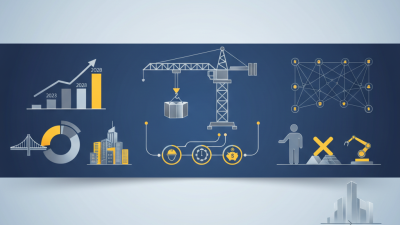
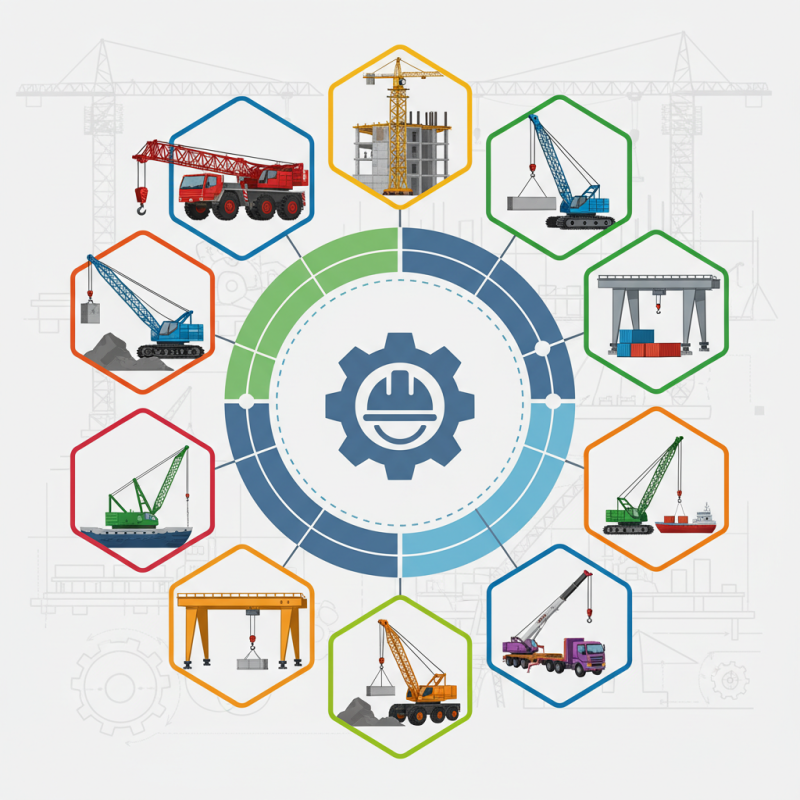
This chart illustrates the top ten heavy crane types and their projected growth rates over the next decade, showcasing future trends in heavy crane technology and design.