What is a Truck Crane and How Does It Work?
Truck cranes play a vital role in the construction and heavy lifting industry. According to the Global Crane Market Report 2021, truck cranes accounted for approximately 15% of the global crane sales. These versatile machines combine mobility with powerful lifting capabilities, making them indispensable on job sites.
Operating a truck crane requires both skill and precision. The American Society of Mechanical Engineers (ASME) emphasizes the importance of proper training for operators. Improper use can lead to accidents, resulting in injuries or property damage. Even with training, challenges remain. Each job site presents unique conditions that affect performance and safety.
Despite their effectiveness, truck cranes often face limitations. They may not be suitable for all terrain types, impacting their reach and efficiency. Understanding the strengths and weaknesses of these machines is crucial for project managers. Accurate assessments can lead to better resource allocation and enhanced safety measures on site.
What is a Truck Crane?
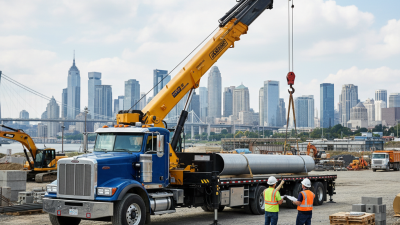
A truck crane is a type of crane mounted on a truck chassis, designed for mobility and versatility. It is widely used in construction, landscaping, and industrial operations. These cranes combine the features of a mobile crane with the ease of transport that a truck provides. According to industry reports, the global mobile crane market is expected to grow at a CAGR of 4.5% through 2027, reflecting the increasing demand for efficient lifting solutions.
Truck cranes often feature a telescopic boom that can extend to great heights. This flexibility allows for a range of lifting capacities, making it suitable for various tasks, from loading and unloading materials to erecting structures. Typically, they can lift loads ranging from a few tons to over 100 tons. Despite their utility, proper training and maintenance are crucial. Inadequate operator training can lead to accidents. The safety measures required include thorough inspections before operation.
Tip: Always assess site conditions before using a truck crane. Shifting ground or overhead obstructions can pose risks. Operators need to maintain awareness of their surroundings. Regular maintenance checks are vital to avoid equipment failures. Restoring parts promptly can prevent safety hazards and down-time. Understanding these factors is essential for effective crane operation.
Key Components of a Truck Crane
Truck cranes are essential machines in construction and heavy lifting. Understanding their key components can enhance their usage and safety. A truck crane consists primarily of a boom, a chassis, and various control systems. The boom is the extendable arm that lifts heavy loads. It can reach significant heights and distances, allowing it to maneuver effectively. The chassis provides mobility, enabling the crane to travel across job sites.
Control systems play a crucial role in operation. Operators use these systems to maneuver the crane safely. They rely on hydraulic mechanisms to raise and lower the boom, offering precision in heavy lifting tasks. Stability is vital, so truck cranes often have outriggers to secure their position. This prevents tipping, especially when lifting heavy materials.
Tips: Ensure regular maintenance on your truck crane. Inspections can prevent potential failures. Operators should receive proper training. This increases operational safety and efficiency. Always adhere to load limits. Overloading can lead to accidents. Be aware of environmental factors like wind speed, as they can affect crane stability.
What is a Truck Crane and How Does It Work? - Key Components of a Truck Crane
| Component |
Description |
Function |
Material |
| Chassis |
The base of the truck crane that supports all components. |
Provides mobility and stability. |
Steel |
| Boom |
The extended arm of the crane used to lift loads. |
Extends and retracts to reach different heights and distances. |
Aluminum or Steel |
| Trolley |
A device that moves along the boom to where the load is needed. |
Facilitates horizontal movement of the load. |
Steel |
| Winch |
A mechanical device used to wind or unwind the cable. |
Lifts and lowers the load. |
Steel |
| Counterweights |
Weights added to the base to enhance stability. |
Prevents tipping during operation. |
Concrete or Steel |
| Control System |
System for operating the crane's functions. |
Enables precise movements and safety features. |
Electronics |
How Truck Cranes Operate Mechanically
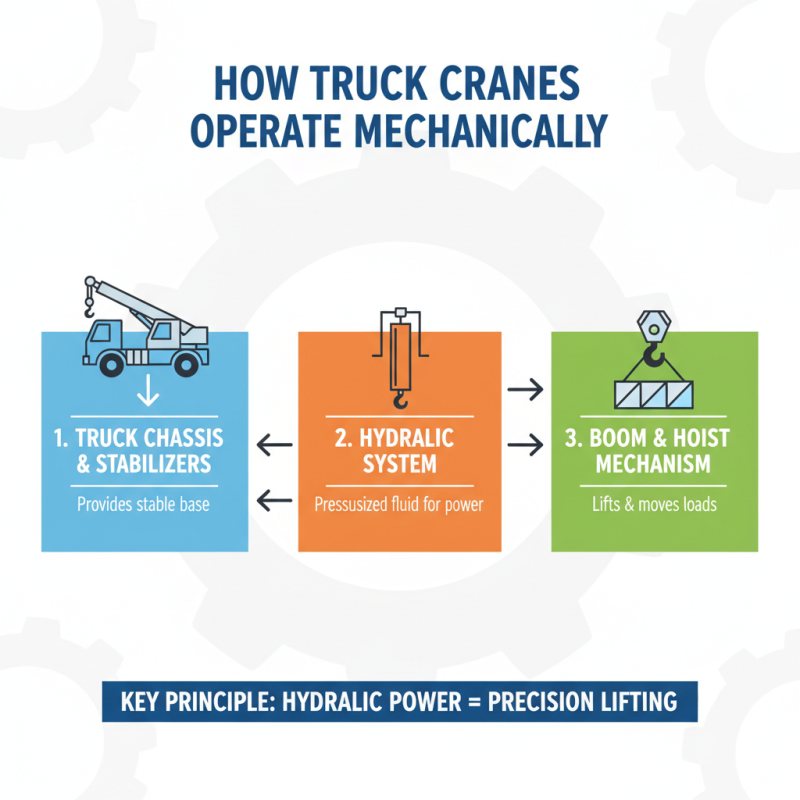
Truck cranes are versatile machines commonly used in construction sites and other heavy-lifting situations. Their mechanical operation is fascinating and relies on a series of interlinked components. The core of a truck crane is its hydraulic system. This system uses pressurized fluid to enable the crane to lift and move heavy loads with precision.
The boom, extending from the truck chassis, is pivotal in the crane's operation. It can move both vertically and horizontally. When the hydraulic system is activated, it raises the boom, allowing the crane to reach significant heights. The counterweights on the opposite side ensure stability during operation. Without proper maintenance, these components may fail, leading to unsafe conditions.
Tips: Regularly inspect the hydraulic system and boom for leaks or obstructions. Ensure the counterweights are correctly positioned. It’s crucial to avoid overloading the crane to maintain safety. Sometimes, truck cranes might struggle with precision. This can result from incorrect setup or inadequate training. Always prioritize proper training for operators to enhance safety and efficiency on the job site.
Applications of Truck Cranes in Various Industries
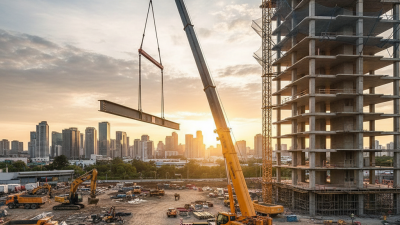
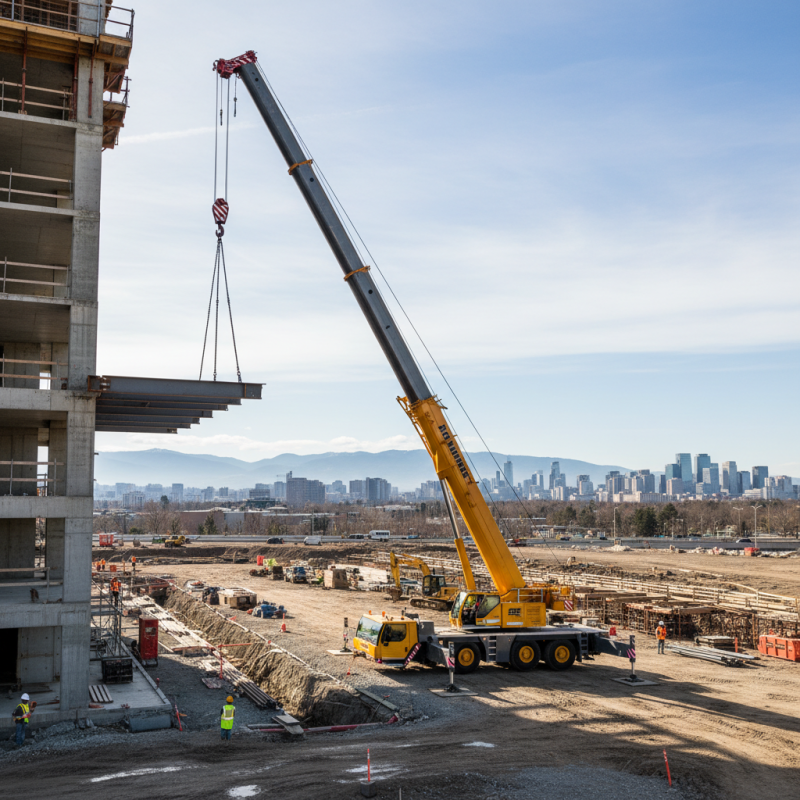
Truck cranes play a significant role across various industries. In construction, they lift heavy materials like steel beams and concrete panels. This capability allows for efficient building processes. Truck cranes can navigate tight spaces. This feature is crucial for urban construction sites.
In the shipping industry, truck cranes assist in loading and unloading cargo. They enable quick and effective operations, especially in busy ports. Often, cranes work alongside other machines. Coordination is key to avoid accidents. Moreover, safety training is vital. Workers need to understand the crane's limits and capabilities.
Mining operations also rely on truck cranes. They help in moving equipment and materials quickly. This minimizes downtime, boosting productivity. However, improper use can lead to serious accidents. Regular maintenance of the crane ensures reliability. It's essential that operators follow safety protocols diligently. The diverse applications of truck cranes highlight their importance, yet they require careful handling.
Applications of Truck Cranes in Various Industries
Safety Considerations When Using Truck Cranes
Safety considerations are crucial when operating truck cranes. These machines can lift heavy loads, but
improper use can lead to serious accidents. Operators must undergo rigorous training to understand the mechanics and safety protocols.
It's vital to know the crane's limits. Overloading can cause tipping, resulting in injuries or fatalities.
Before each operation, a thorough inspection of the truck crane is essential. Check for any wear and tear,
especially on cables and hooks. Ensure that the area is clear of obstacles and that the ground can support the crane's weight. If conditions
are hazardous, such as high winds or unstable ground, it’s prudent to delay the operation. Communication among team members is also key.
Use clear signals to coordinate movements and ensure everyone is on the same page.
Despite taking precautions, accidents can still happen. Unexpected situations may arise that require adaptive decision-making.
Reflecting on past incidents can help improve future safety practices. Safety is a continuous journey,
where operators must remain vigilant and proactive. By fostering a culture of safety, risks can be minimized effectively.