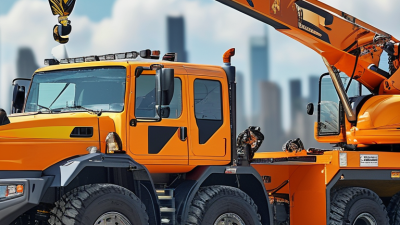
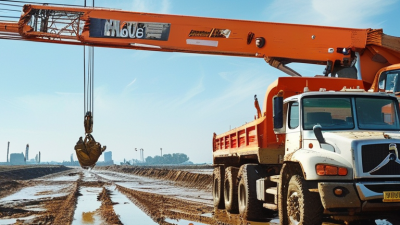
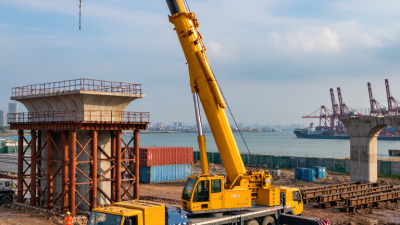
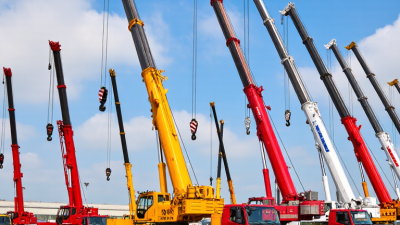
A pickup truck crane turns a work vehicle into a compact lifting platform. Its boom, hydraulic system, mounting frame, and stabilizers work together beside the truck bed. The operator positions the boom, controls hydraulic pressure, and balances the load within the crane’s rated capacity. A steel beam may look manageable. Its center of gravity can still shift suddenly.
Industry data explains why this equipment deserves careful attention. The U.S. Bureau of Labor Statistics recorded 297 crane-related occupational deaths between 2011 and 2017, averaging about 42 fatalities annually. OSHA’s crane regulations emphasize proper planning, competent operators, stable ground, signal communication, and load control. The National Commission for the Certification of Crane Operators also treats load charts, setup, and inspection as essential knowledge. These reports discuss cranes broadly, not only pickup-mounted models. That limitation matters.
Mike Parnell, a recognized crane-training specialist and former Industrial Training International executive, has emphasized, “The most important part of any lift is the planning.” That statement fits a pickup truck crane especially well. Limited bed space, uneven shoulders, overhead wires, and changing payloads can alter a lift within seconds. The truck may appear stable. The ground may disagree.
This guide explains what a pickup truck crane is, how its hydraulic and mechanical systems work, and where real operating risks begin. It also examines capacity charts, outriggers, counterbalance, inspections, and practical job-site decisions. Some specifications vary by manufacturer. Readers should verify every rating against the crane manual and applicable local requirements. A simple explanation is useful, but it is never a substitute for trained judgment.
What Is a Pickup Truck Crane?
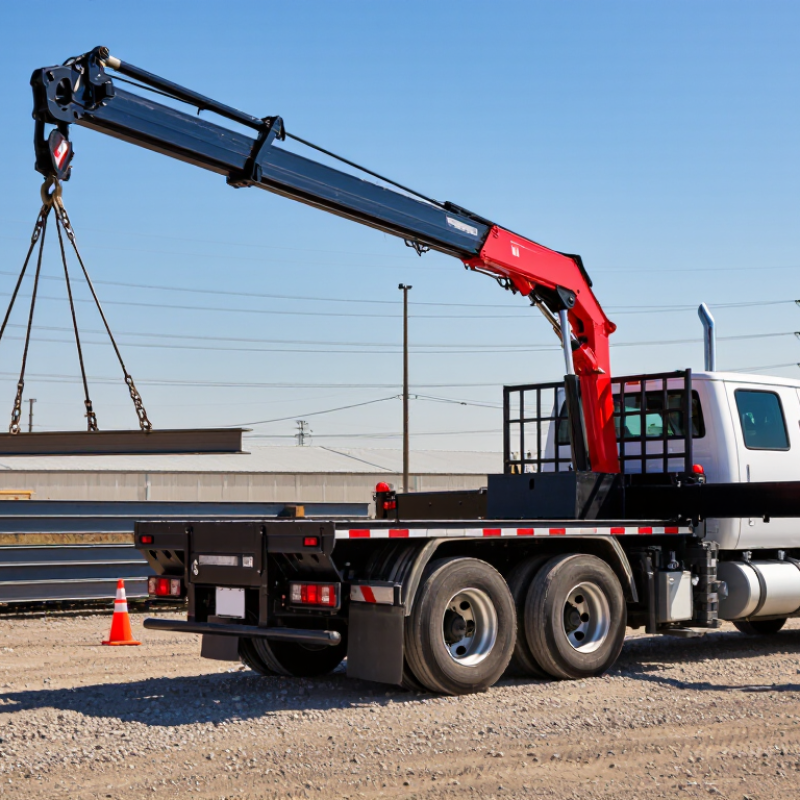
A pickup truck crane is a compact lifting device fitted into a truck bed or mounted to its frame. It usually includes a boom, pivot, winch, hydraulic cylinder, and stabilizing legs. The crane lifts equipment by converting hydraulic pressure or electric motor power into controlled movement. A load chart shows the safe capacity at different boom angles and distances.
The working principle is simple, but the physics are not. Extending the boom increases reach and reduces lifting capacity. A heavy load can also shift the truck’s center of gravity. Many compact cranes lift several hundred pounds, while larger configurations may exceed one ton. Exact capacity depends on the mounting structure, vehicle payload, counterbalance, and ground conditions. ASME B30.22-2023 emphasizes rated-load controls for mobile, articulating-boom equipment. OSHA guidance also stresses stable ground and proper inspections. In its 2023 Census of Fatal Occupational Injuries, the U.S. Bureau of Labor Statistics reported that transportation incidents caused 38.2% of workplace deaths. That figure is not crane-specific, but it exposes a wider risk: movement and positioning deserve careful judgment. A rating is not a promise.
Tips: Check the load chart before every lift. Keep the boom close to the truck’s centerline. Use stabilizers on firm, level ground. Inspect hooks, cables, pins, and hydraulic lines. Stop if the truck leans, the load swings, or the setup feels uncertain. Small mistakes become expensive quickly.
| Data Dimension | Typical Data or Specification | How It Works or Why It Matters | Important Notes |
|---|---|---|---|
| Definition | A compact lifting device mounted in or on the bed of a pickup truck | It uses a boom, pivoting mechanism, winch, and lifting cable or chain to raise and position loads. | The crane is intended for controlled material handling, not for lifting people. |
| Primary Power Sources | Manual, electric, hydraulic, or vehicle-powered systems | Manual models use a hand-operated mechanism, while powered models use an electric motor, hydraulic pump, or vehicle power system. | The available power source affects lifting speed, duty cycle, and installation requirements. |
| Common Lifting Capacity | Approximately 500 to 3,000 lb (227 to 1,361 kg) | The rated capacity indicates the maximum load the crane can lift under specified operating conditions. | Actual capacity varies by crane design, boom position, truck payload rating, and load distance from the pivot. |
| Typical Boom Reach | Approximately 3 to 8 ft (0.9 to 2.4 m) | The boom extends the lifting point beyond the truck bed so loads can be moved into or out of the vehicle. | A longer reach generally reduces lifting capacity because it increases the moment applied to the base. |
| Boom Adjustment | Fixed, telescopic, or manually repositionable | Adjustable booms allow the operator to change the load radius and reach for different tasks. | The rated capacity should be checked at every boom position, not only at the shortest reach. |
| Rotation Range | Often about 180° to 360° | A pivoting base allows the boom to swing the load between the truck bed, the ground, and nearby work areas. | The usable rotation range depends on the mounting arrangement and clearance around the truck. |
| Main Lifting Components | Boom, winch, cable or chain, hook, pivot, and mounting plate | The winch creates pulling force, the cable transfers that force, and the hook connects to the load. | All lifting components should be inspected for wear, deformation, corrosion, and damage before use. |
| Operating Principle | Mechanical advantage combined with controlled cable tension | The boom supports the load while the winch raises or lowers it by winding or releasing the cable on a drum. | The operator must keep the load balanced and avoid sudden starts, stops, or side pulls. |
| Truck Compatibility | Determined by payload rating, bed structure, and mounting location | The truck must safely support the crane, the lifted load, passengers, tools, and any other cargo at the same time. | The crane rating must not exceed the truck’s available payload or axle capacity. |
| Mounting Methods | Bed-mounted, receiver-mounted, or frame-reinforced installation | The mounting system transfers lifting forces into the truck structure and helps resist twisting during operation. | Installation may require reinforcement, secure fasteners, and compliance with the vehicle manufacturer’s requirements. |
| Stabilization | Outriggers, stabilizer legs, reinforced bases, or secured truck positioning | Stabilization reduces movement and helps prevent the truck or crane from tipping while a load is suspended. | The truck should be parked on firm, level ground with the parking brake applied before lifting. |
| Typical Applications | Loading engines, pumps, generators, construction materials, and utility equipment | The crane reduces manual handling when objects are too heavy or awkward to lift safely by hand. | The load must be within the crane’s rated capacity and properly secured to the hook or lifting accessory. |
| Load Control | Vertical lifting with a balanced, centered load | Keeping the cable aligned with the lifting point minimizes swinging, side loading, and unwanted stress on the boom. | Dragging loads, lifting at an angle, and shock loading can damage the crane and create serious hazards. |
| Control Methods | Hand lever, pendant control, wired remote, or wireless control | Controls regulate hoisting, lowering, and sometimes boom rotation or extension. | The operator should maintain a clear view of the load or use a trained signal person. |
| Safety Factor | Based on the applicable design standard and manufacturer’s engineering calculations | A safety factor provides a margin between the rated working load and the component’s theoretical failure load. | A safety factor is not permission to exceed the marked working load limit. |
| Pre-Use Inspection | Check mounting bolts, boom, cable, hook latch, winch, controls, and warning labels | Inspection helps identify conditions that could cause dropped loads, structural failure, or loss of control. | Damaged or excessively worn equipment should be removed from service until properly repaired. |
| Weather and Environment | Wind, uneven ground, wet surfaces, and overhead obstructions affect safe operation | Environmental conditions can reduce stability, visibility, and load control. | Suspended loads should not be operated in conditions that exceed the equipment’s safe operating limits. |
| Key Limitation | Capacity decreases as reach increases | The load creates a turning force, or moment, around the crane base. Greater distance produces greater stress. | Always use the capacity chart for the specific boom angle, extension, and operating configuration. |