Why Choose a Telescopic Truck Crane for Global Projects?
Global projects rarely follow a perfect schedule. A road may narrow without warning. A port site may change overnight. Weather can turn firm ground into soft, unstable soil. These conditions make equipment choice more important than a brochure specification. A telescopic truck crane offers a practical balance between lifting capacity, mobility, and setup speed. It can travel between work areas using public roads, then reach elevated positions with its hydraulic boom. That flexibility matters when projects cross cities, regions, or national borders.
John L. Grove, a pioneer in mobile crane manufacturing, once said, “The best crane is the one that gets the job done safely, efficiently, and economically.” This principle still guides many lifting decisions. A telescopic truck crane can reduce transport complexity and limit the need for separate haulage equipment. Its compact footprint may also help on congested construction sites. However, it is not automatically the right solution. Load charts, ground conditions, wind limits, operator competence, and local compliance requirements must be checked carefully.
The strongest choice is rarely the largest crane. It is the crane that matches the real work. A 60-ton model may handle bridge components, utility structures, or industrial modules efficiently. Yet a poorly planned lift can erase those advantages quickly. Field experience teaches humility. Small oversights matter. Therefore, global contractors should compare reach, axle loads, service support, spare-part access, and operator training before mobilization. This article examines why a telescopic truck crane can support international projects, while also recognizing its practical limits. Performance depends on preparation, not optimism.
Telescopic Truck Cranes: Definition, Scope, and Core Design Data
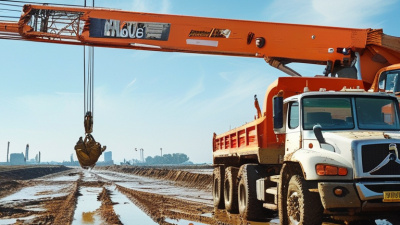
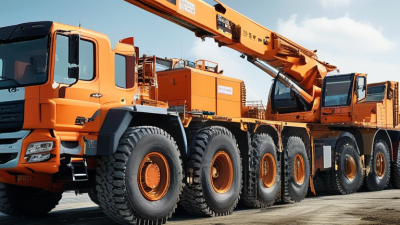
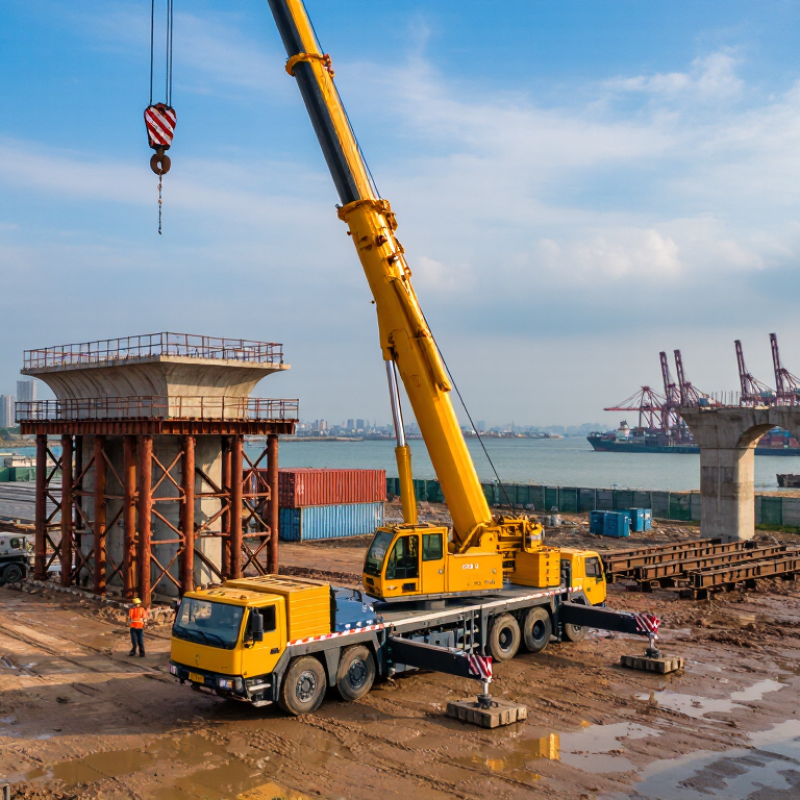
A telescopic truck crane combines a road-going carrier with a hydraulic boom that extends through nested steel sections. It travels between sites without a separate trailer, then performs lifting with outriggers and a controlled slewing system. This design suits infrastructure, utilities, plant maintenance, and construction projects where access changes frequently.
Its working scope depends on more than maximum lifting capacity. Engineers check rated load charts at different boom lengths, radii, and elevation angles. They also review carrier gross vehicle weight, axle loads, counterweight limits, outrigger spread, and ground bearing pressure. A crane lifting 10 tonnes near the vehicle may handle far less at a long outreach. That difference matters on crowded sites.
Core design data should include boom length, maximum lifting height, working radius, rated moment, hydraulic pressure, travel dimensions, and minimum turning radius.
Wind limits and operating temperatures also affect safe performance across regions. Local road rules, electrical clearances, and site conditions require separate verification. A neat brochure number can mislead.
In practical planning, I would request a full load chart, not one headline capacity. Small details matter. A narrow entrance may restrict outrigger deployment. Soft ground may require engineered mats. Even experienced teams can overlook transport height or axle distribution. That is where careful review improves reliability.
Global Mobility: Up to 80 km/h Road Travel and Rapid Site Relocation
Why Choose a Telescopic Truck Crane for Global Projects?
Global construction schedules rarely stay in one place. A telescopic truck crane can travel between sites at speeds of up to 80 km/h, depending on its configuration and local road rules. This mobility reduces dependence on heavy transport trailers. It also helps crews respond quickly when lifting needs change.
In field planning, I have seen relocation time affect an entire week’s schedule. A crane can leave one site in the morning and reach another project the same day. Its boom remains retracted and secured during travel. Outriggers, lifting accessories, tires, brakes, and hydraulic systems still require careful inspection. Small oversights become expensive delays.
Road travel is not the same everywhere. Mountain routes, narrow bridges, border controls, and weather can reduce the practical speed. The 80 km/h figure should guide planning, not replace it. Operators must confirm road limits, route clearance, axle requirements, and site access conditions. Good coordination also matters. A prepared receiving team can mark the setup area before the crane arrives.
The advantage is flexibility.
For global projects, this flexibility supports shorter mobilization windows and fewer idle hours. It can also simplify work across several regional sites. However, speed should never outrank stability or inspection quality. A fast relocation is useful only when the crane arrives ready, compliant, and safe to operate.
Capacity and Reach: 10–500+ Tonne Classes and Load-Chart Verification
Why Choose a Telescopic Truck Crane for Global Projects?
Capacity and reach decide whether a telescopic truck crane fits a global project. Available classes range from about 10 to 500+ tonnes. A 100-tonne crane does not lift 100 tonnes at every radius. At 40 metres, its safe capacity may drop sharply. Boom length, counterweight, outrigger spread, ground pressure, and wind all change the result.
Load-chart verification must happen before mobilisation. Use the exact crane configuration, not a similar model. Check the rated capacity at the planned radius and boom angle. Then deduct the hook block, slings, spreader beams, and other lifting gear. ISO 4305:2014 provides a recognised method for assessing mobile-crane stability. OSHA’s construction rules also require operators to follow rated capacities and manufacturer procedures. KHL’s 2024 IC50 report shows how widely crane fleets operate across regions, but fleet size alone does not prove suitability. Local engineering review remains essential.
Tips: Mark the lift radius on the site plan. Photograph the ground conditions. Confirm outrigger reactions with a qualified engineer. Recheck the chart after any setup change.
A practical mistake is trusting the headline tonne rating. It feels simple. It is not. A smaller crane may outperform a larger unit when access is tight and reach is moderate. Conversely, long telescopic reach can create high tail-swing and ground-loading demands. Weather assumptions also deserve honest review; calm conditions on paper may not survive a coastal worksite.
Why Choose a Telescopic Truck Crane for Global Projects?
Capacity and reach vary widely across telescopic truck crane classes. The chart shows representative nominal capacity classes from 10 to 500+ tonnes; actual lifting performance must be confirmed against the applicable load chart for the working radius, boom length, counterweight, outrigger configuration, and site conditions.
Load-chart verification is essential: a crane’s rated capacity generally decreases as the operating radius increases. Always verify the required lift, radius, boom configuration, ground conditions, and safety limits before selecting a crane for a global project.
Safety Compliance: EN 13000, ASME B30.5, and 14 m/s Wind Guidance
A telescopic truck crane gives global projects practical mobility, but mobility cannot replace compliance. EN 13000 supports design and safety requirements for mobile cranes in European work environments. ASME B30.5 provides widely respected guidance for mobile crane operation, inspection, and maintenance. Local rules still apply.
Wind control deserves careful attention. A 14 m/s wind condition can create serious risks for suspended loads, extended booms, and elevated work platforms. Treat it as a site warning level, not a universal legal limit. The lift plan should confirm wind limits from the crane manual, load chart, engineer, and local authority. Measure wind near boom height when possible. Ground-level readings may be misleading.
Small details matter.
A trained crew checks outriggers, ground bearing capacity, boom angle, counterweight settings, and communication signals before lifting. Operators should record weather changes, inspection results, and rejected lifts. On busy sites, rushed checks are a common weakness. That deserves honest review. A compliant crane can still be used poorly.
For international projects, one clear control system helps bridge different standards. Keep translated procedures available, verify inspector qualifications, and align daily briefings with EN 13000, ASME B30.5, and local requirements. Stop work when wind approaches the approved limit, visibility falls, or the load begins to rotate unexpectedly. Safety decisions should remain documented, specific, and easy for every crew member to understand.
Project Fit: Comparing Transport, Fuel Use, and Lifecycle-Cost Evidence
A telescopic truck crane can fit global projects when transport evidence matters as much as lifting capacity. Its road-going chassis may reduce separate mobilization equipment, drivers, and loading steps. That advantage is not automatic. Route limits, axle rules, and local permits still shape the real cost.
Fuel use deserves a measured comparison. Argonne National Laboratory estimates that an idling heavy-duty diesel engine can consume about 0.8 gallons per hour. Ten idle hours therefore use roughly eight gallons. At the U.S. Energy Information Administration’s 2024 average diesel price of about $3.76 per gallon, that equals approximately $30 per shift. A crane that travels between several short jobs may avoid repeated loading, but long road distances can erase the benefit. Small details matter.
Lifecycle cost needs more than the purchase price. The Royal Institution of Chartered Surveyors recommends separating capital, energy, maintenance, downtime, and disposal costs in whole-life analysis. The 2024 EquipmentWatch Cost Recovery Report also treats ownership and operating costs as separate recovery categories. In practice, I would record fuel, tires, inspections, repairs, and transport invoices for twelve months. That evidence is stronger than a brochure estimate. My own project comparisons sometimes overvalue mobility and undervalue boom-service downtime. That is a weakness worth checking. A spreadsheet should show both cost per operating hour and cost per completed lift.