Top Heavy Crane Suppliers for Global Buyers What to Consider?
Heavy cranes are essential for large-scale construction and industrial projects. Their significance is undeniable in lifting heavy materials and ensuring smooth operations. When global buyers seek reliable suppliers, they face many options. This can be overwhelming, given the critical nature of these machines.
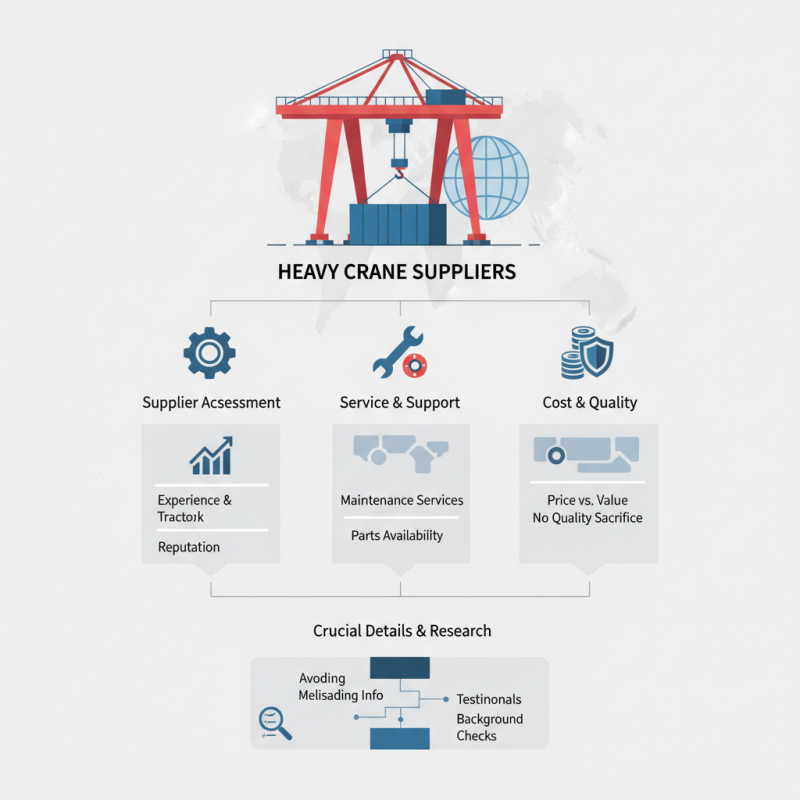
Choosing the right heavy crane supplier involves careful consideration. Buyers must assess the supplier's experience and track record. Supplier reputation plays a vital role in ensuring safety and quality. It's also important to evaluate maintenance services and parts availability. Cost is another factor, but quality should never be sacrificed for a lower price.
Buyers often overlook crucial details in their search. Some suppliers may present misleading information about capabilities. Research and testimonials are invaluable tools for discerning reliability. A thorough understanding of a supplier's background can prevent costly mistakes. These reflections on supplier choices will guide global buyers in their search for trusted heavy crane suppliers.
Top Heavy Crane Suppliers: An Overview of the Global Market Landscape
The global heavy crane market is diverse and dynamic. Buyers must consider multiple factors when selecting suppliers. First, experience matters. Suppliers with a long history often have proven track records. They understand the intricacies of various industries. This understanding enables them to meet specific needs effectively.
Next, expertise in engineering is crucial. High-quality cranes require advanced manufacturing techniques. Buyers should look for suppliers known for their innovation and technical skills. Additionally, customer service is paramount. Being able to communicate easily with suppliers can make a significant difference. Quick responses can help solve urgent problems.
Another vital consideration is reliability. A supplier's ability to deliver on time affects project timelines. Buyers should assess past performance records. And while numerous options exist, some suppliers may not live up to their promises. Hence, thorough research and careful evaluation are essential. This ensures that decisions are informed and suitable for long-term success.
Key Features to Look for in Heavy Crane Suppliers: Functionality and Safety
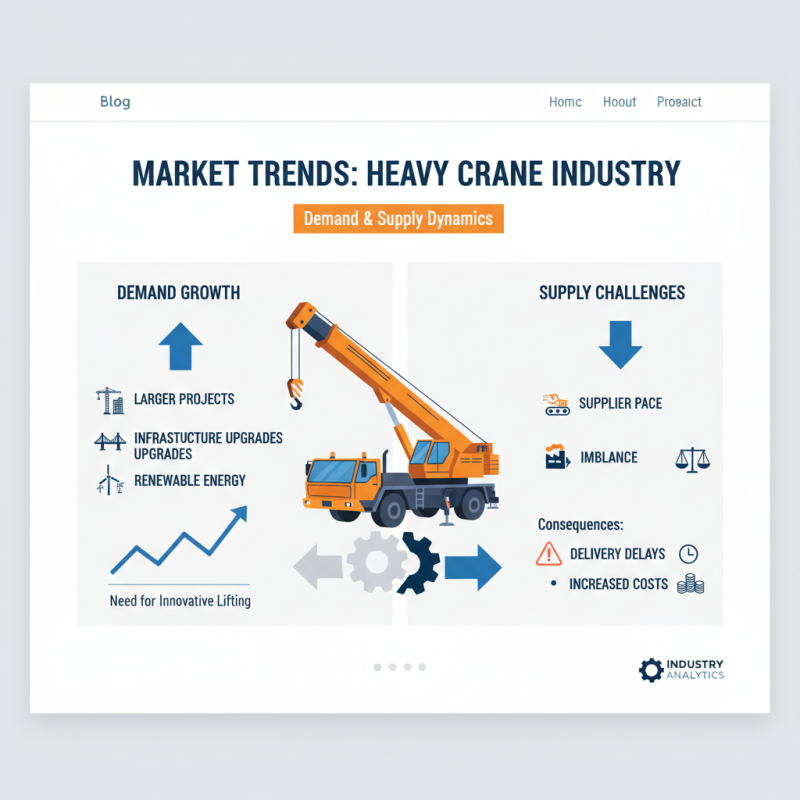
When selecting a heavy crane supplier, functionality and safety are paramount. According to recent industry reports, demand for heavy cranes is projected to grow by over 5% annually. This emphasizes the necessity for reliable suppliers that prioritize performance and adherence to safety standards.
Functionality encompasses a range of factors. Buyers should assess the lifting capacity and reach of the cranes. Data shows that more than 60% of operational downtime stems from equipment failure. Therefore, selecting a supplier that offers robust machinery and reliable maintenance becomes essential. Safety features, such as overload protection and advanced control systems, are crucial. Studies indicate that cranes equipped with enhanced safety mechanisms reduce accident rates significantly.
However, not all suppliers maintain uniformly high standards. Quality control can vary greatly. Some heavy crane providers may cut corners on safety tests to lower costs. This raises questions about reliability and potential liabilities. Conducting thorough research and seeking suppliers with strong reputations can mitigate these risks. By prioritizing functionality and safety, buyers can make informed decisions that align with their operational needs.
Top Heavy Crane Suppliers for Global Buyers
| Feature |
Details |
| Load Capacity |
Up to 200 tons |
| Main Features |
Hydraulic, electric hoist, boom extension |
| Safety Certifications |
ISO 9001, CE, ASME |
| Warranty Period |
2-5 years |
| After-Sales Service |
24/7 support, parts availability |
| Customization Options |
Tailor to project specifications |
| Delivery Time |
4-12 weeks based on model |
| Training Provided |
Operator and maintenance training |
Impact of Technology Advancements on Heavy Crane Manufacturing
The heavy crane manufacturing industry is evolving quickly. Technology advancements have transformed production processes and equipment efficiency. New materials and methods are shaping the crane market. For instance, the use of lightweight alloys has improved the strength-to-weight ratio. This shift leads to cranes that are easier to transport and maneuver.
Automation is another key area. Robotics in manufacturing enhance precision and reduce human error. However, the transition to automated systems can present challenges. Many companies must invest in training their workforce. Without skilled workers, the full benefits of technology cannot be realized.
**Tips:** Consider how technology impacts your choice of suppliers. Look for those that adapt to innovations. Evaluate if they adopt automation and advanced materials. Prioritize suppliers with a focus on safety and reliability in their technological practices. These factors often indicate a quality product.
Impact of Technology Advancements on Heavy Crane Manufacturing
Analyzing Cost Efficiency: Budgeting for Heavy Crane Investments
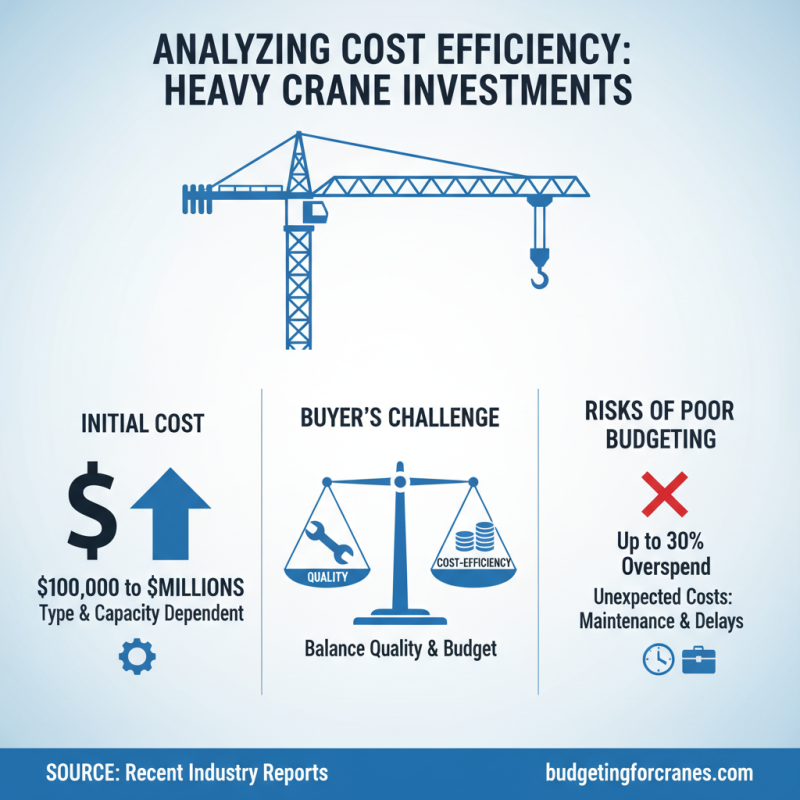
Investing in heavy cranes requires careful budgeting and analysis. The initial cost of cranes can be substantial, often ranging from $100,000 to several million dollars, depending on the type and capacity. Buyers face pressure to balance quality and cost-efficiency. Recent industry reports highlight that poor budgeting can lead to overspending, with up to 30% of buyers experiencing unexpected costs related to maintenance and operational delays.
Maintenance costs significantly impact the total cost of ownership. According to industry statistics, approximately 15% of a crane's budget should be dedicated to maintenance. However, many companies underestimate this aspect. They often neglect the costs of spare parts and skilled labor needed for repairs. Transparency in cost forecasting is vital to avoid financial pitfalls.
Buyers should conduct thorough market research. Factors like operational efficiency and resale value must be included in budgeting. Despite the high upfront investment, innovative cranes can reduce operational costs by up to 20% over their lifespan. This emphasizes the need for buyers to consult industry experts and conduct risk assessments, enabling them to make informed decisions.