Choosing the right pickup crane can shape your daily productivity, operating costs, and jobsite safety. A suitable model must match your truck’s payload, bed length, mounting structure, and intended lifting tasks. A crane that looks compact may still affect axle loads and vehicle balance.
This guide examines practical decisions behind selecting a pickup crane. It considers lifting capacity, boom reach, hydraulic or electric operation, control systems, stabilizers, and maintenance access. A 1,000-pound load at the boom’s shortest reach behaves differently from the same load extended several feet. That detail matters.
Small differences matter.
Field experience shows that buyers often focus on maximum capacity first. That can be misleading. Real performance depends on load distance, truck configuration, ground conditions, and operator technique. A reliable choice should reflect normal work, not an occasional best-case lift. It should also leave a reasonable safety margin.
Manufacturers’ load charts and installation instructions deserve careful attention. Qualified installers can verify mounting strength, hydraulic connections, and vehicle compatibility. Local workplace and road requirements may also affect equipment selection, training, inspection, and use. Requirements vary by location, so professional advice remains important.
The process is not perfectly simple. Some businesses may accept a lighter crane for lower cost, then regret limited reach later. Others may purchase excess capacity and carry unnecessary weight every day. This article helps weigh those trade-offs clearly, using practical examples and evidence-based questions. The goal is a pickup crane that works consistently, protects the vehicle, and supports safer, more efficient operations.
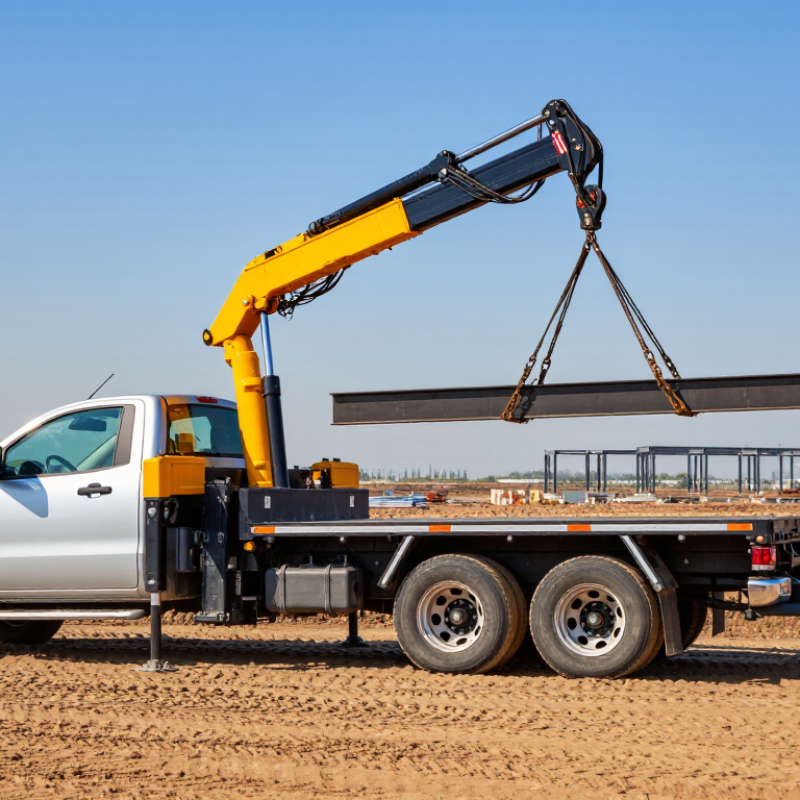
Choosing the right pickup crane starts with defining the work, not browsing equipment catalogs. Record the heaviest load, its dimensions, lifting points, average reach, and daily lifting frequency. A 1,000-kilogram load at 1.5 meters may exceed the same crane’s capacity at 3 meters. Write down the actual radius.
OSHA’s crane safety guidance emphasizes rated capacity, load radius, ground conditions, and proper setup. These details should shape your requirements. The U.S. Bureau of Labor Statistics’ 2023 Census of Fatal Occupational Injuries also identifies transportation and material-moving work as a high-risk occupational category. Therefore, specify stabilizer width, uneven-ground limits, operator visibility, emergency controls, and inspection access. A compact crane may suit urban maintenance, while a higher-capacity unit may fit construction deliveries. Space matters too. Measure the pickup bed, tailgate clearance, axle loading, and storage height before selecting lifting equipment.
Do not rely on brochure capacity alone. Ask for a complete load chart and verify the truck’s payload after adding the crane, tools, fuel, and workers. The International Organization for Standardization’s ISO 4305 standard provides guidance for crane stability assessment, but site conditions still require professional judgment. A muddy shoulder can defeat a technically compliant setup. It happens.
Review your last six months of jobs. Note the loads that caused delays, awkward repositioning, or rushed decisions. Those records are more useful than an impressive maximum rating. My own planning bias would be choosing extra capacity too quickly; that can increase vehicle weight, cost, and operating complexity without improving daily productivity.
| Business Requirement | Typical Load Profile | Recommended Rated Capacity | Typical Working Reach | Suggested Crane Configuration | Vehicle Payload Requirement | Important Selection Criteria |
|---|---|---|---|---|---|---|
| Service calls and light maintenance | Hand tools, pumps, compact motors and parts weighing up to approximately 250 kg | 0.5–0.8 t at the shortest boom position |
1.5–2.5 m | Manual or hydraulic knuckle-boom crane with a compact mounting base | At least 1,000 kg after passengers, tools, fuel and equipment are included | Low folded height, quick setup, compact footprint and easy access around the truck bed |
| Landscaping and property maintenance | Generators, soil compactors, pumps, logs and landscape equipment from 250–500 kg | 0.8–1.2 t at the shortest boom position |
2–3 m | Hydraulic crane with a rotating boom and a manual or hydraulic extension | At least 1,300 kg after the complete crane installation and working payload are counted | Side reach, rotation range, hydraulic power source and compatibility with bed-mounted equipment |
| Construction and building materials | Bricks, tiles, compact mixers, cutting equipment and bundled materials from 500–1,000 kg | 1.5–2.0 t at the shortest boom position |
2–4 m | Hydraulic knuckle-boom crane with stabilizer legs and a reinforced subframe | At least 1,800 kg after crane, subframe, accessories, crew and cargo are considered | Load chart at every boom position, chassis mounting limits, stabilizer footprint and duty cycle |
| Utility, electrical and communications work | Cable reels, transformers, batteries, inspection equipment and replacement components from 300–800 kg | 1.0–1.5 t at the shortest boom position |
2.5–4 m | Hydraulic crane with precise control, proportional valves and remote operating capability | At least 1,500 kg after the crane, tools, technicians and installed equipment are included | Fine positioning, emergency stop, visibility, electrical-work clearances and secure load handling |
| Agricultural and rural operations | Feed bags, fencing materials, pumps, small implements and farm supplies from 400–900 kg | 1.0–1.8 t at the shortest boom position |
2–3.5 m | Hydraulic crane with a corrosion-resistant finish, wide stabilizers and durable controls | At least 1,600 kg after passengers, fuel, tools and seasonal equipment are counted | Uneven-ground stability, weather resistance, serviceability and compatibility with off-road use |
| Heavy roadside recovery support | Spare wheels, compressors, batteries and recovery equipment from 700–1,500 kg | 1.5–2.5 t at the shortest boom position |
2–4 m | Heavy-duty hydraulic crane with a reinforced chassis connection and hydraulic stabilizers | At least 2,500 kg after the full recovery system, crew, tools and intended load are included | Structural strength, braking capacity, stabilizer deployment, operating speed and continuous-duty rating |
| Frequent daily lifting | Repeated loading and unloading throughout the workday, commonly 10 or more lifts per shift | Select by load chart with a continuous-duty rating |
Based on the normal loading zone | Hydraulic crane with an auxiliary cooler, protected hoses and scheduled maintenance access | Reserve sufficient payload for the crane, subframe, hydraulic components, crew, tools and cargo | Duty cycle, hydraulic oil temperature, maintenance intervals, control ergonomics and operator training |
| Occasional or emergency lifting | Infrequent loads where low purchase cost and rapid deployment are more important than speed | 0.5–1.0 t for light-duty applications |
1.5–2.5 m | Manual or compact hydraulic crane with removable or semi-permanent mounting | Confirm the truck remains within its legal payload and axle limits when the crane is installed | Storage requirements, setup time, weather protection, inspection frequency and operator competence |